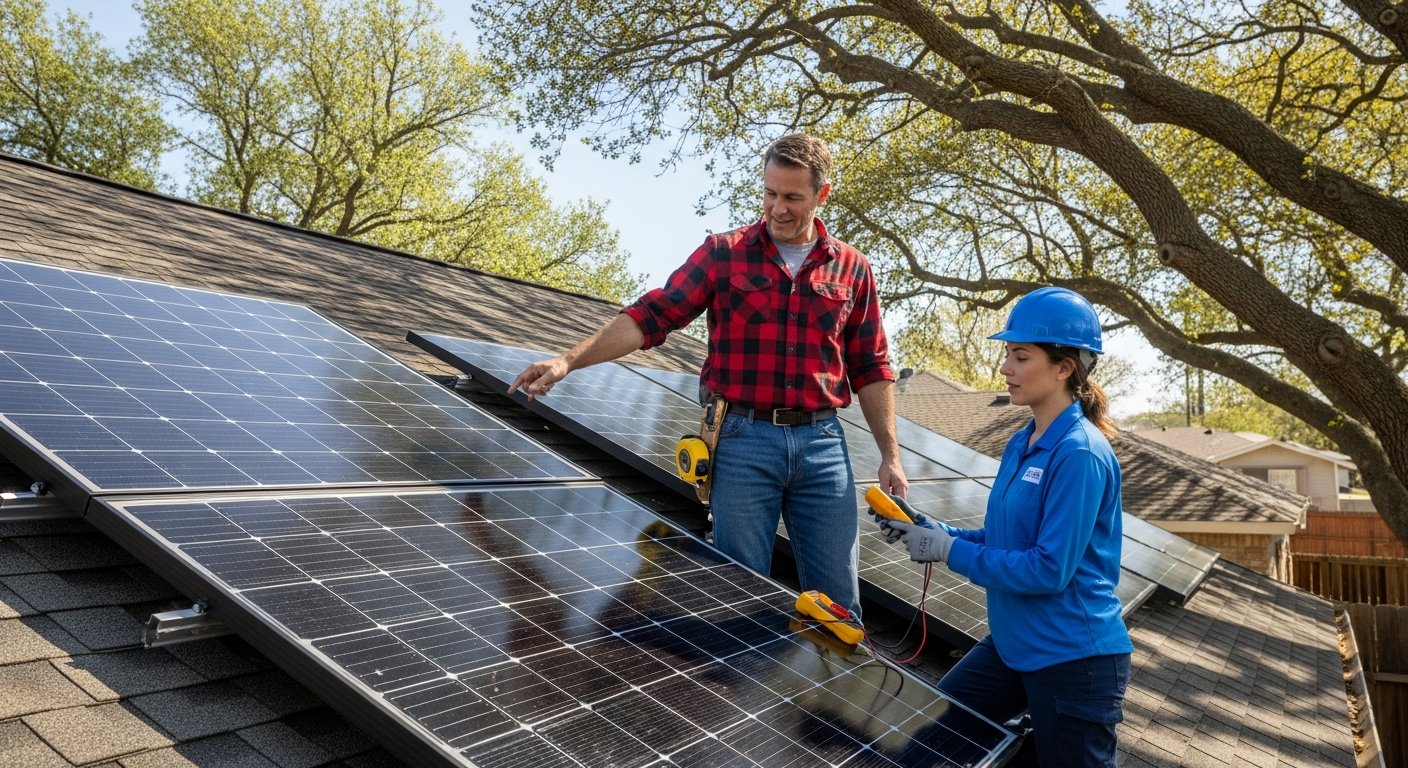
Solar Panel Efficiency: What Homeowners Must Know
Boost your home's energy output by understanding solar panel efficiency. Higher efficiency means more savings and faster payback on your investment.

By Dylan Harris
Learn more about Solar Panel Installation and Repair for guides, costs, and what to expect.
Compare Solar Panel Installation and Repair Pros Near You

Enter your ZIP code to compare top-rated local professionals and request free quotes.
Rising electricity costs and growing environmental concerns are driving more homeowners to consider solar power. But not all solar panels perform equally. The key metric that determines how much energy you actually generate from the sun is solar panel efficiency. Understanding this number can mean the difference between a system that pays for itself quickly and one that underdelivers. Whether you are shopping for your first solar installation or looking to upgrade an existing system, knowing how efficiency works will help you make a smarter investment.
What Is Solar Panel Efficiency?
Solar panel efficiency measures the percentage of sunlight that a panel converts into usable electricity. For example, a panel with 22% efficiency converts 22% of the sunlight that hits it into electrical power. The rest is reflected or turned into heat. Modern residential panels typically range from 15% to 23% efficiency. The number matters because higher efficiency panels produce more electricity in the same amount of space. This is especially critical if you have a limited roof area or shading from nearby trees and buildings. Efficiency is not the only factor to consider, but it is one of the most important for long-term energy production.
Factors That Affect Solar Panel Efficiency
Several variables influence how efficiently a solar panel operates in real-world conditions. Understanding these factors can help you set realistic expectations for your system's performance and identify ways to improve output.
- Temperature: Solar panels lose efficiency as they get hotter. Most panels have a temperature coefficient around -0.3% to -0.5% per degree Celsius above 25°C (77°F). On hot summer days, a panel may produce 10-15% less electricity than its rated output.
- Shading: Even partial shading on a single panel can drastically reduce the output of the entire string. Modern microinverters and power optimizers can mitigate this, but it is best to avoid shade whenever possible.
- Orientation and Tilt: Panels facing south (in the northern hemisphere) at an angle equal to your latitude generally capture the most sunlight. Incorrect orientation can reduce efficiency significantly.
- Degradation: All solar panels lose efficiency over time. Most manufacturers guarantee that panels will retain at least 80-90% of their original output after 25 years. Higher quality panels degrade more slowly.
- Soiling: Dust, bird droppings, leaves, and pollen block sunlight. Regular cleaning can restore up to 5% of lost efficiency.
By addressing these factors proactively, you can keep your system running at peak efficiency for decades. For example, installing panels on a roof with minimal shading and using high-quality mounting hardware to allow proper airflow can reduce temperature-related losses. Many homeowners also choose to trim nearby trees before installation.
How to Maximize Solar Panel Efficiency for Your Home
Maximizing efficiency starts before you even purchase panels. The best approach combines careful planning, quality equipment, and ongoing maintenance. Here is a step-by-step framework to ensure you get the most from your solar investment.
- Choose high-efficiency panels. Look for panels with efficiency ratings above 20%. Manufacturers like Qcells solar panels are known for their high efficiency and durability, making them a top choice for homeowners who want reliable performance over time.
- Optimize your roof orientation and tilt. A professional installer will evaluate your roof's azimuth and pitch. If your roof is not ideal, consider ground-mounted systems that can be positioned perfectly.
- Use microinverters or power optimizers. These devices ensure that each panel operates independently, so shading or soiling on one panel does not drag down the performance of others.
- Monitor your system regularly. Many modern solar setups include monitoring apps that show real-time production. Unexpected drops can alert you to cleaning needs or equipment issues.
- Keep panels clean. In most climates, rain does a decent job of washing away dust. But in dry or dusty areas, a gentle hose rinse every few months can help maintain output.
Beyond these steps, emerging technology is making it easier than ever to optimize performance automatically. AI-powered tools, such as those discussed in our article on AI in solar panel efficiency guide, can help you monitor and adjust your system's performance in real time, catching inefficiencies before they cost you money.
The Role of AI in Optimizing Efficiency
Artificial intelligence is transforming how solar systems operate. AI algorithms can analyze weather forecasts, historical production data, and energy usage patterns to predict when your panels will produce the most power. They can also detect anomalies, such as a single underperforming panel, and alert you or your installer. Some advanced systems even adjust inverter settings automatically to match changing conditions. For homeowners who want to squeeze every kilowatt-hour out of their investment, AI-based energy management is becoming a valuable addition.
Comparing Solar Panel Efficiency Ratings
When you start comparing panels, you will see efficiency numbers listed on spec sheets. But not all ratings are created equal. The standard test conditions (STC) used to measure efficiency are based on a laboratory environment with 1000 watts per square meter of sunlight and a temperature of 25°C. Real-world conditions are rarely that perfect. That is why it is also useful to look at the panel's temperature coefficient and its performance under low-light conditions. A panel that maintains high efficiency in early morning or late afternoon may produce more total energy over a year than a panel with a slightly higher STC rating but worse low-light performance.
Another important metric is the panel's degradation rate. Premium panels often degrade at only 0.25-0.5% per year, while budget models may degrade at 0.8-1% per year. Over 25 years, that difference can amount to thousands of dollars in lost generation. When shopping, ask for the manufacturer's warranty on both workmanship and power output. A strong warranty is a sign of confidence in the panel's long-term efficiency.
Is Higher Efficiency Always Worth the Cost?
High-efficiency panels (those above 22%) typically cost more per watt than standard efficiency panels. For homeowners with ample roof space, the extra cost may not be justified. You can simply install a few more standard panels to achieve the same total output. However, if your roof is small, shaded, or has complex geometry, paying a premium for higher efficiency can be the most cost-effective route. It allows you to generate enough power with fewer panels. Additionally, high-efficiency panels often come from manufacturers with stronger reputations and longer warranties, which can add to their long-term value.
A good way to decide is to calculate the cost per watt of the system, including installation. Compare that to the expected energy production over the system's lifetime. Many solar calculators can help with this. SolarEnergy.ai offers free tools to estimate your savings and compare options, so you can see which efficiency level makes sense for your specific situation.
How SolarEnergy.ai Can Help You Get the Most Efficient System
Choosing the right solar panels for your home involves balancing efficiency, cost, and durability. In our guide on how to choose the best solar panels for home, we break down the key specifications to look for and walk you through the decision process step by step. From understanding efficiency ratings to evaluating manufacturers, that resource covers everything you need to make an informed choice.
Once you have selected your panels, SolarEnergy.ai can connect you with trusted installers who will design a system optimized for your roof and local climate. Our platform also provides energy surveys that identify the best orientation and shading solutions for your property. And if you are interested in the latest technology, we offer insights into AI-driven energy management systems that keep your panels running at peak efficiency year-round.
Finally, remember that efficiency is just one piece of the puzzle. A well-designed system with proper installation, good financing, and the right incentives can deliver significant savings. Solar panel efficiency is the foundation, but the overall value comes from a holistic approach to solar energy.
By understanding the factors that influence efficiency and taking proactive steps to maximize it, you can ensure that your solar investment pays off for decades. Start by requesting a free solar quote from SolarEnergy.ai and see how much you could save with a high-efficiency system tailored to your home.