Solar Monitoring Platform: Track Your System's Performance
Discover how a solar monitoring platform gives you real-time insight into your system's performance, helping you maximize savings and protect your investment.

By Owen Phillips
Learn more about Solar Panel Installation and Repair for guides, costs, and what to expect.
Compare Solar Panel Installation and Repair Pros Near You

Enter your ZIP code to compare top-rated local professionals and request free quotes.
Your solar panels work silently on your roof, converting sunlight into savings every day. But how do you know they are performing at their best? Without visibility into your system's output, a faulty panel or inverter issue can go unnoticed for months, quietly inflating your electricity bills and delaying your return on investment. A solar monitoring platform solves this problem by giving you real-time insight into your energy production, consumption, and overall system health. This guide explains what these platforms do, why they matter, and how you can use them to protect your investment and maximize your savings.
What Is a Solar Monitoring Platform?
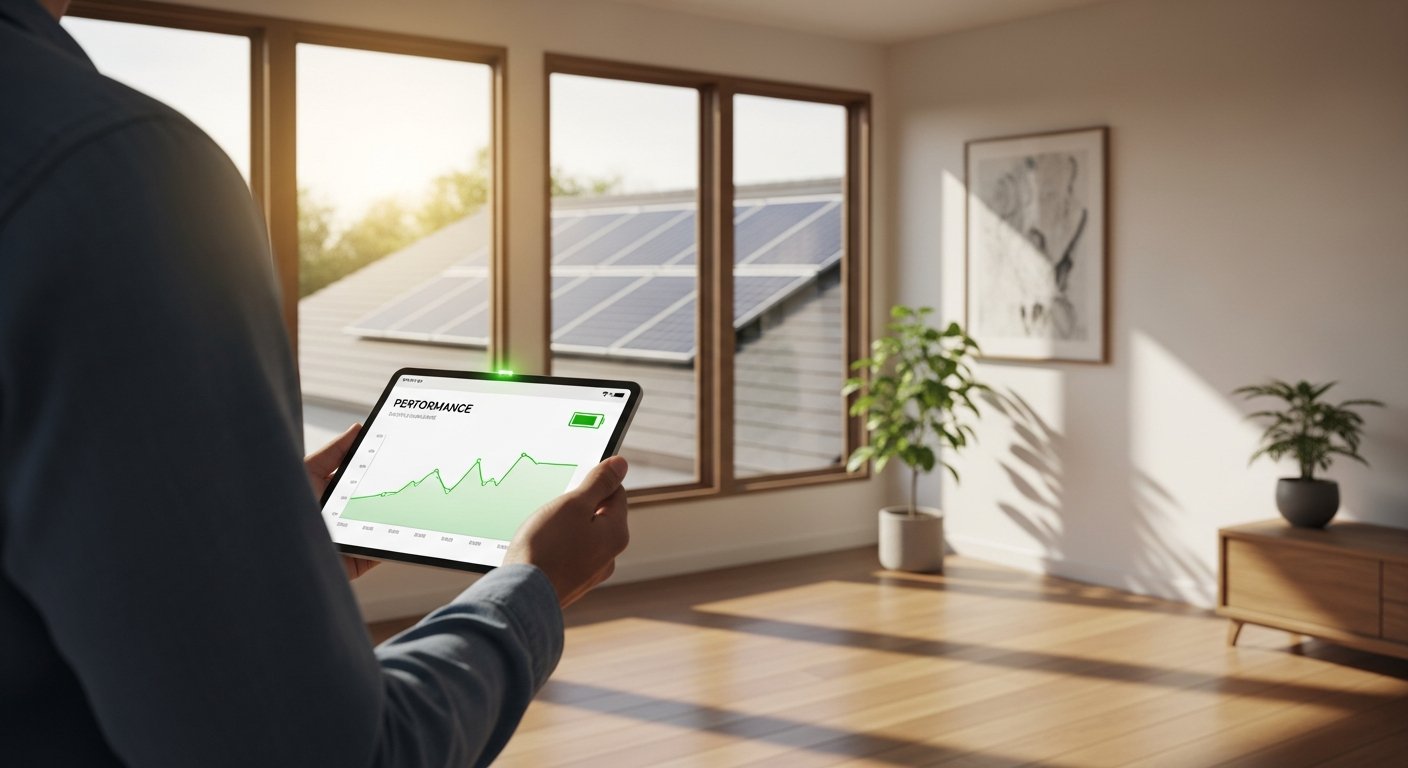
A solar monitoring platform is a software service that connects to your solar inverter or panel-level sensors to collect and display data about your system's performance. It typically provides a dashboard, often accessible via a web portal or mobile app, where you can see how much energy your panels are generating, how much your home is consuming, and how much solar energy you are exporting to the grid. Advanced platforms also track environmental data like irradiance and temperature, which helps explain performance variations.
These platforms range from basic manufacturer-provided tools to sophisticated third-party solutions that aggregate data from multiple sources. For homeowners, the core value is simple: visibility. You can finally see, at a glance, whether your system is producing what it should. For businesses and installers, monitoring platforms offer fleet management capabilities, allowing them to oversee hundreds of installations remotely and identify underperforming systems quickly.
Why Monitor Your Solar System?
Monitoring is not just a nice-to-have; it is essential for protecting your investment. A typical residential solar system costs tens of thousands of dollars, and you expect it to generate electricity for 25 years or more. Without monitoring, you are flying blind. Small issues, like a single panel degraded by shade or a failing microinverter, can reduce your system's output by 5% to 15% without any visible sign. Over time, that lost production translates directly into lost savings.
Monitoring also provides peace of mind. When you receive a high electricity bill, you can quickly check your platform to confirm your solar system is working correctly and rule out a performance issue. It also helps you understand your energy consumption patterns. By seeing when you produce the most solar energy and when you use the most electricity, you can shift high-energy activities like running the dishwasher or charging your electric car to peak solar hours, further reducing your reliance on grid power.
Key Benefits of Using a Solar Monitoring Platform
Beyond the basic visibility, a robust monitoring platform delivers several concrete benefits that directly impact your wallet and your system's longevity.
- Early fault detection: Alerts for abnormal performance, such as a sudden drop in output or a communication error, let you address issues before they become costly repairs.
- Maximized energy yield: By identifying underperforming panels or strings, you can schedule maintenance or cleaning to restore full production.
- Data-driven savings: Consumption analytics help you optimize your usage patterns to increase self-consumption of solar power, which is often more valuable than exporting it to the grid.
- Proof of performance: Detailed production logs are valuable if you need to file a warranty claim or dispute a utility bill with net metering.
- Peace of mind: Real-time status updates and historical reports reassure you that your investment is working as intended.
These benefits compound over time. A monitoring platform can pay for itself many times over by preventing a single prolonged outage or a slow degradation that goes unnoticed for months.
How to Choose the Right Solar Monitoring Platform
Selecting a monitoring platform depends on your system's hardware, your technical comfort, and your specific needs. Here are the key factors to consider:
Compatibility with Your Solar Equipment
The most critical factor is compatibility. Your monitoring platform must be able to communicate with your inverter or microinverters. Most major inverter manufacturers, like Enphase, SolarEdge, and Fronius, offer their own monitoring apps that are free and tightly integrated with their hardware. If you have a string inverter with no built-in monitoring, you may need a third-party solution that uses add-on sensors or current transformers (CTs) to measure production and consumption.
Data Granularity and Features
Look for a platform that provides at least system-level and inverter-level data. Panel-level monitoring is available with microinverter or power optimizer systems and can pinpoint exactly which panel is underperforming. Also, consider whether you need consumption monitoring, which measures your home's overall electricity usage, not just solar production. This feature is essential for understanding your net energy flow and maximizing savings.
Ease of Use and Alerts
Choose a platform with a clean, intuitive interface. You should be able to see your system's status in less than a minute. Equally important are alert settings. The platform should proactively notify you via email or push notification if production drops below a threshold or if a component fails. Some platforms allow you to set custom alerts, such as a daily production target.
Data Export and Integration
If you are a data enthusiast or want to analyze long-term trends, check whether the platform allows you to export raw data (CSV or API access). Integration with smart home ecosystems, like Home Assistant or Amazon Alexa, can also be a nice bonus, allowing you to automate energy-hungry devices based on real-time solar output.
For most homeowners, the easiest path is to start with the manufacturer's free monitoring app. However, if you want a unified view of multiple systems or more advanced analytics, a third-party platform like Sense, Emporia, or SolarEdge's monitoring portal may be worth the investment.
Getting Started with Monitoring: A Step-by-Step Approach
Implementing a monitoring solution is usually straightforward, especially if you are integrating with existing equipment. Here is a practical roadmap:
- Check your inverter's built-in monitoring: Consult your inverter's manual or manufacturer's website to see if it has built-in Wi-Fi or Ethernet connectivity and a free monitoring app. If so, follow the setup instructions to connect it to your home network.
- Create an account and link your system: Download the manufacturer's app, create an account, and use the serial number on your inverter to register your system. The app should guide you through the connection process.
- Configure notifications: Set up email or push alerts for system errors, low production, or communication loss. Make sure you understand what each alert means and have a plan for responding.
- Track your baseline: For the first few weeks, check your platform daily to understand your typical production patterns. Note the effects of weather, shading, and time of year.
- Review monthly reports: Most platforms generate monthly summaries. Use these to compare your system's performance against the same month in previous years, adjusting for weather variations.
Once your monitoring is active, you can start using the data proactively. For example, if you notice a consistent drop in production in the late afternoon, you might be able to trim nearby trees to reduce shading.
Common Monitoring Mistakes to Avoid
Even with a great platform, homeowners often make errors that undermine the benefits. Being aware of these pitfalls can help you get the most from your monitoring system.
- Ignoring alerts: A notification is not just a suggestion. If you receive a low-production alert, investigate it promptly. Delaying action can lead to prolonged energy loss and potential damage.
- Not understanding the data: Spend time learning what the numbers mean. If you do not know your system's expected daily output, you cannot spot anomalies. Use your platform's baseline data or your install contract's production estimate as a reference.
- Forgetting about consumption monitoring: Many homeowners focus only on production. Without consumption data, you are missing half the picture. Understanding your usage is key to maximizing self-consumption and reducing bills.
- Assuming the platform is always accurate: Sensors can drift or fail. Periodically cross-check your platform's production readings against your utility bill to ensure consistency.
By avoiding these mistakes, you can transform your monitoring platform from a passive log into an active tool for savings.
Advanced Monitoring: AI and Automation
The next frontier in solar monitoring is the integration of artificial intelligence and machine learning. Modern platforms are moving beyond simple data logging to predictive analytics. For example, AI can forecast your solar production based on weather patterns, allowing you to pre-cool your home or charge your EV during peak generation hours. It can also detect subtle performance degradation that might indicate a failing component before a complete failure occurs. These systems can also optimize your energy usage by automatically controlling smart devices, like thermostats and water heaters, to run when solar energy is abundant.
SolarEnergy.ai is at the forefront of this trend, offering tools that leverage AI to help homeowners maximize their solar investment. In our guide on AI solar monitoring explained, we show how these advanced features can boost your home savings by predicting production and automating your energy use. Similarly, our article on AI solar monitoring for home savings provides a practical roadmap for implementing these technologies. For a deeper dive into the software side, see our analysis of solar monitoring software with AI, which compares the top platforms and their smart features.
Making the Most of Your Monitoring Data
Merely having a dashboard is not enough; you need to act on the insights. Here are a few ways to turn data into dollars:
- Schedule high-energy tasks during peak production: Run your pool pump, dishwasher, or EV charger between 10 a.m. and 2 p.m. on sunny days to maximize self-consumption.
- Identify and fix shading issues: If a particular panel consistently underperforms, investigate nearby trees or new structures that might be casting shade. Trimming a few branches can restore lost production.
- Monitor your battery (if you have one): Track your battery's state of charge and discharge cycles to ensure it is being used optimally, whether for time-of-use arbitrage or backup power.
- Use alerts to catch problems early: Set up a daily or weekly production report. If you see a sudden drop, contact your installer or check for error codes on the inverter display.
By integrating these practices into your routine, you can ensure your solar system operates at peak efficiency year after year.
Solar monitoring is no longer an optional extra; it is a critical component of a modern solar installation. It provides the transparency you need to protect your investment, optimize your savings, and contribute to a more sustainable future. Whether you are a new solar owner or a seasoned pro, take the time to set up and use your monitoring platform. Your wallet and the planet will thank you.
Learn more about Solar Panel Installation and Repair for guides, costs, and what to expect.
Compare Solar Panel Installation and Repair Pros Near You
Enter your ZIP code to compare top-rated local professionals and request free quotes.