Solar Energy Management Software: Maximize Your Savings
Discover how solar energy management software optimizes your system, shifts usage to peak sun hours, and cuts your electric bill significantly.

By Ethan Contributor
Learn more about Solar Panel Installation and Repair for guides, costs, and what to expect.
Compare Solar Panel Installation and Repair Pros Near You

Enter your ZIP code to compare top-rated local professionals and request free quotes.
Your solar panels are producing clean energy, but are you truly getting the most from every kilowatt they generate? Many homeowners assume that after installation, the system will automatically optimize itself. In reality, without the right oversight, you could be losing savings to shifting rate structures, inefficient consumption habits, and missed opportunities for grid interaction. That is where solar energy management software steps in, transforming a passive array of panels into an active, intelligent asset. This technology does not just track production; it analyzes data, forecasts usage, and can even automate decisions to shrink your electric bill further.
What Is Solar Energy Management Software?
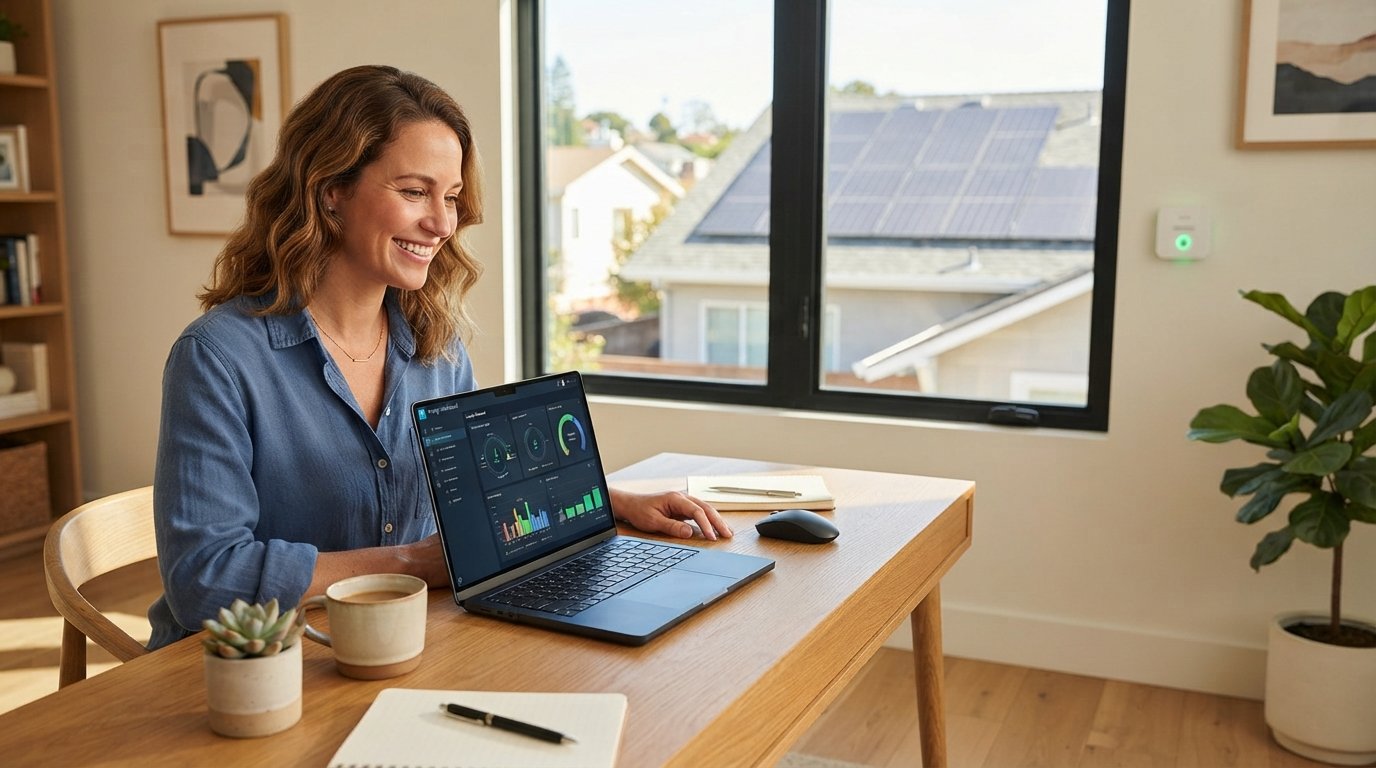
At its core, solar energy management software is a digital platform that connects to your solar system's inverter and, often, your smart meter and battery storage. It collects real-time data on energy production, household consumption, and grid pricing. Then, it uses algorithms, sometimes enhanced by artificial intelligence, to present this information in an understandable dashboard. More advanced systems move beyond simple monitoring to actively control how and when you use energy, aligning your habits with periods of maximum solar generation and lowest utility rates.
Think of it as a financial advisor for your home's energy portfolio. The software identifies where you are overspending, when you are missing opportunities to store excess power, and how changes in your routine could lead to significant annual savings. For homeowners, this means moving from a passive relationship with your utility company to an active, informed one. You are no longer just a ratepayer; you become a micro-grid manager.
Modern platforms also integrate weather forecasts. If a cloudy day is predicted, the software can prepare your battery to be more fully charged in advance, ensuring you have backup power and do not need to pull expensive electricity from the grid during peak evening hours. This predictive capability is a game changer for maximizing both efficiency and resilience.
Why Your Solar System Needs Intelligent Oversight
Solar panels are only half of the savings equation. The other half is smart consumption. Without management software, your panels might send excess energy back to the grid for a low credit, while you simultaneously draw power from the grid at a high rate during peak times. This mismatch is common, especially in homes without battery storage. Solar energy management software bridges this gap by shifting your energy usage to times when your solar production is highest. For example, running your dishwasher, laundry, and pool pump during the midday sun instead of at night can dramatically reduce the amount of electricity you purchase from your utility.
Moreover, utility rates are becoming more complex. Many states now implement time-of-use (TOU) plans, where electricity costs more during late afternoon and early evening. Some are even moving toward demand charges, which are based on your highest 15-minute usage peak in a month. Managing these complex tariffs manually is nearly impossible. The software, however, can automatically turn down high-consumption devices like your EV charger or air conditioner during critical peak windows, saving you money without you even noticing.
This level of control directly addresses the primary concern of most solar adopters: ensuring their investment delivers real financial returns. A system that is not actively managed may only save you 60-70% of your potential savings. With intelligent software, that figure can rise to 90% or more, especially when combined with battery storage. This is not just about convenience; it is about protecting the return on one of the largest investments you will make in your home.
Key Features to Look For in Management Platforms
As you evaluate your options, it is important to understand that all solar energy management software is not created equal. Some tools are glorified dashboards, while others are true automation engines. To get the most value, you should look for a platform that offers a comprehensive set of features designed for real-world savings.
Here are the essential capabilities that separate basic monitors from high-performance management systems:
- Real-time production and consumption tracking: This shows you exactly what your panels are generating versus what your home is using, down to the minute.
- Time-of-use rate optimization: The software automatically adjusts battery charging and discharging schedules to avoid expensive peak-hour electricity.
- Smart device integration: It can communicate with smart thermostats, EV chargers, and connected appliances to shift their energy usage to solar-rich hours.
- Predictive weather and usage forecasting: Using local weather data and your historical patterns, it anticipates changes and pre-emptively optimizes your battery state of charge.
- Alerts and anomaly detection: If a panel underperforms or a device breaks, you will know immediately, preventing costly losses in efficiency.
These features work together to create a holistic picture of your energy ecosystem. Having individual features is not enough; the true power lies in how they interact. For instance, weather forecasting is only useful if it can adjust your battery schedule. Smart device integration is only valuable if it is tied to real-time rate data. When you see these elements working in concert, you know you have a robust management system.
Furthermore, consider the user interface. The best software provides clear, actionable insights without requiring an engineering degree. You should be able to glance at your phone and see a simple summary: "You saved $3.20 today by using solar power during peak hours." This immediate feedback loop encourages continued engagement and helps you make smarter energy choices throughout the day.
How Software Integrates with Battery Storage for Greater Savings
Battery storage and solar energy management software are natural partners. A battery without intelligent software is like a phone that charges at night and discharges during the day, it does not make sense. The software acts as the brain that decides when to store energy and when to release it. In a standard setup, your solar panels charge the battery during the day. Then, as the sun sets and grid rates rise, the software instructs the battery to power your home instead of drawing from the grid. This simple shift alone can slash your evening electricity costs.
But the capabilities go much deeper. Some utility companies offer programs that let you discharge your battery to the grid during peak demand events, earning you credits or direct payments. The management software can auto-enroll you in these programs and automatically discharge at the right moment. It can also determine the optimal depth of discharge. Should you drain the battery to zero every day to maximize savings, or preserve some capacity for a potential power outage? The software balances your financial goals with your resilience needs, and it can learn your preferences over time.
This synergy is particularly valuable for those participating in net metering programs. Instead of just sending excess energy to the grid for a modest credit, you can store it and use it yourself during high-rate periods. This effectively increases the value of every kilowatt your panels produce. In our guide on solar energy automation, we discuss how this integration creates true energy independence and optimizes your return on investment.
Real-World Savings: A Closer Look at the Numbers
The financial impact of using solar energy management software is not abstract; it shows up in your monthly utility statement. Consider a typical household in Arizona with a 10 kW solar array and a 13.5 kWh battery. Without active management, they might save around $180 per month on their electric bill, mostly by offsetting daytime usage and earning net metering credits. With a smart management system that shifts EV charging to midday and discharges the battery during peak hours, their savings can jump to $260 per month. That is an additional $960 per year, which can pay for the software subscription and then some.
These savings come from several mechanisms. First, you avoid buying expensive peak-rate electricity. Second, you maximize the value of your solar generation by consuming more of it yourself instead of selling it at a low wholesale rate. Third, you reduce your demand charges if your utility imposes them. Over the 25-year life of a solar system, these optimizations can amount to $10,000 to $20,000 in extra savings. That is not a small sum; it is a significant boost to your overall return on investment.
Beyond the direct bill savings, there is also a maintenance angle. The software monitors system performance and can detect issues early, such as a failing inverter or a micro-crack in a panel. By catching these problems quickly, you avoid extended periods of reduced production, which can cost you hundreds of dollars in lost energy. In essence, the software acts as a continuous health check for your solar investment, ensuring it operates at peak efficiency for decades.
Choosing the Right Software for Your Home
Selecting the right solar energy management software is a critical decision that depends on your specific solar setup and goals. If you already have a solar system, your inverter manufacturer often provides a basic monitoring app. However, these apps are usually limited in their automation capabilities. For truly intelligent management, you may need a third-party solution that can communicate with your inverter, battery, and smart devices. Compatibility is key, so check whether the software supports your specific equipment brands. Some popular options include Enphase Envoy, SolarEdge monitoring, and Tesla app for Powerwall owners, but the market is expanding quickly.
If you are in the process of installing a new solar system, this is the perfect time to plan for advanced management. Many installers, including those connected through AI energy management systems, will offer integrated solutions that include the software from day one. This ensures seamless compatibility and avoids the headache of trying to retrofit a new system later. When evaluating quotes, ask specific questions about the software: What features are included? Is there a monthly fee? Will it integrate with my smart home devices? How does it handle time-of-use rates?
Remember that the cheapest option is not always the most cost-effective. A basic monitoring app may be free, but it could cost you hundreds in missed savings each year. Conversely, a premium software platform with a small subscription fee can pay for itself many times over. Focus on the total value proposition: what is the software's ability to reduce your bill, and what is the price of that reduction? As you compare options, think about your long-term needs. If you plan to add a battery or an EV charger in the future, choose a platform that can accommodate those expansions without requiring a complete overhaul.
Beyond Monitoring: The Future of Energy Management
The world of solar energy management is evolving rapidly, moving toward fully autonomous systems that require little to no input from the homeowner. We are seeing the rise of AI-driven platforms that learn your family's routines, preferences, and comfort thresholds. They can anticipate when you will be home, what the weather will be like, and what your energy usage will be, then execute a perfect plan to minimize grid reliance and cost. This is not science fiction; it is the current frontier of technology. For example, systems can now predict that you will want to pre-cool your home before you arrive from work on a hot day, using solar power stored in your battery, all without you lifting a finger.
These advanced systems also enable participation in virtual power plants (VPPs). In a VPP, hundreds or thousands of home batteries are aggregated and managed by a utility or third-party operator. During peak demand, the operator can draw power from your battery to stabilize the grid, and you are compensated with bill credits or cash. Your management software automatically coordinates this, ensuring you are always getting the best value for your stored energy. It is a win-win: you earn money, and the grid becomes more reliable and sustainable.
As these technologies mature, the role of the homeowner shifts from manual manager to strategic overseer. You set the broad goals (maximize savings, maximize resilience, or a balance), and the software handles the minute-by-minute decisions. This is the true promise of intelligent energy management. It is about making solar power not just a source of clean energy, but a smart financial tool that works for you around the clock. To see how this technology is being applied in real-world scenarios, check out our analysis on how to use AI for solar energy to slash your electric bill.
In the coming years, expect deeper integration with smart home ecosystems, more granular control from utility programs, and even more sophisticated predictive algorithms. The goal is to make solar energy management software an invisible but indispensable part of every solar home, ensuring that the decision to go solar is also a decision to optimize savings continuously.
Taking control of your solar investment is about more than just looking at a dashboard; it is about making your system work as hard as you do. Solar energy management software unlocks the hidden potential in your panels, battery, and daily habits. It turns a passive asset into an active income stream and a powerful hedge against rising utility rates. If you have not yet explored this technology, now is the time. The savings you are leaving on the table are real, and with the right software, they can be yours.