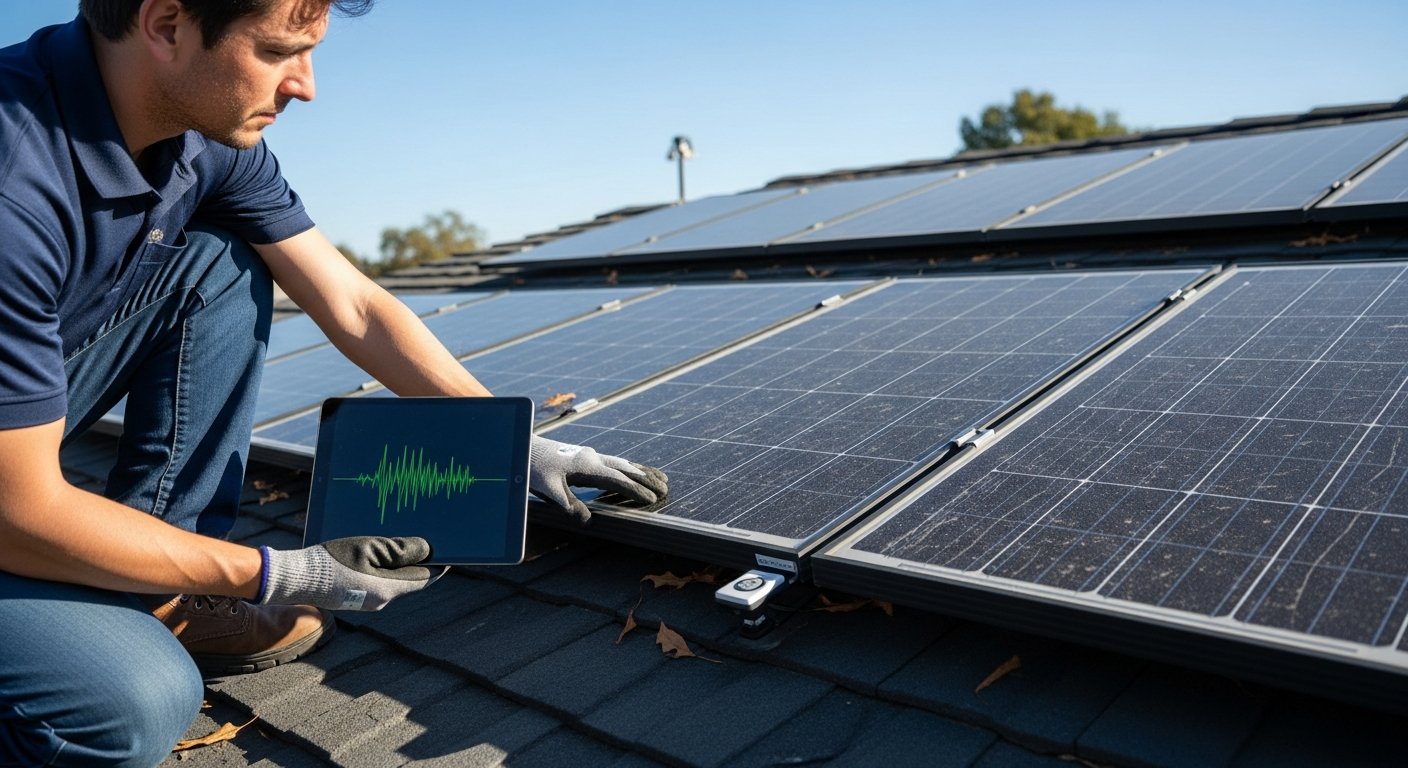
Predictive Maintenance for Solar: Cut Costs, Boost Output
Predictive maintenance for solar uses data and AI to catch small issues before they become costly repairs, boosting output and extending system life.

By Ethan Contributor
Learn more about Solar Panel Installation and Repair for guides, costs, and what to expect.
Compare Solar Panel Installation and Repair Pros Near You

Enter your ZIP code to compare top-rated local professionals and request free quotes.
Solar panels are a long-term investment, but their performance can quietly decline without obvious signs. Dirt buildup, micro-cracks, inverter faults, or shading issues can eat away at your energy production while your system appears to work normally. The difference between a well-maintained array and a neglected one can be 10% to 30% of annual output, which translates directly into lost savings. That is where predictive maintenance for solar changes the game. Instead of waiting for a breakdown or following a fixed schedule, predictive maintenance uses data and analytics to detect problems before they affect your energy generation. It shifts solar upkeep from reactive and routine to intelligent and proactive.
For homeowners and businesses alike, this approach means fewer surprise repairs, higher energy yields, and a faster return on investment. It also aligns with the broader trend of smart home technology and AI-driven energy management. By understanding how predictive maintenance works, what it costs, and how to implement it, you can protect your solar investment and maximize every kilowatt-hour your panels produce.
What Is Predictive Maintenance for Solar?
Predictive maintenance for solar is a data-driven strategy that monitors the health of your photovoltaic (PV) system in real time and forecasts when components are likely to fail or underperform. Unlike preventive maintenance, which runs on a set calendar (for example, cleaning panels every six months), predictive maintenance relies on actual performance data, sensor readings, and machine learning algorithms to identify anomalies early. The goal is to act only when data suggests a problem is emerging, not before it is needed and not after it has already caused damage.
At the core of this approach are several key technologies. Smart inverters collect detailed production data, while sensors track temperature, voltage, and current at the module level. Some systems use aerial drones with thermal cameras to detect hotspots, which are early indicators of cell failure. Cloud-based software then analyzes this data against expected performance models, flagging deviations that might signal a fault. For example, a sudden drop in output on one string of panels, despite clear weather, could indicate a wiring issue or a failing microinverter. The system alerts you or your service provider, so a technician can inspect and fix the problem before it worsens.
This method is particularly effective for larger installations, where manual inspection of every panel is impractical. But even for a single-family rooftop system, predictive maintenance can deliver meaningful benefits by catching issues like soiling (dirt accumulation) or vegetation shading that gradually reduce output. In essence, it turns your solar array into a self-aware system that tells you exactly when it needs attention.
How Predictive Maintenance Works in Practice
The real power of predictive maintenance for solar lies in its workflow, which combines hardware, software, and human expertise. Here is a typical four-step process that many monitoring platforms use:
- Data collection: Sensors, inverters, and smart meters continuously record production, voltage, current, and environmental conditions like irradiance and temperature.
- Performance modeling: The system builds a digital twin of your solar array, predicting expected output based on weather forecasts and historical data.
- Anomaly detection: Machine learning algorithms compare real-time data to the model, flagging any significant deviations that suggest a fault or degradation.
- Alerts and action: When an anomaly is detected, you receive a notification with a probable cause and recommended action, such as scheduling a cleaning or replacing a component.
This continuous loop means that small issues are caught early, before they escalate into costly failures. For instance, a 5% drop in output from one panel might seem minor, but if left unchecked, it could indicate a bypass diode failure that eventually shuts down the entire string. With predictive maintenance, you get an alert weeks or months before that happens, giving you time to plan a repair without losing production.
Many homeowners already have access to basic monitoring through their inverter manufacturer's app, which shows daily production and alerts for complete failures. Predictive maintenance takes this a step further by analyzing trends and providing actionable insights, not just raw data. It answers the question, "Is my system performing as well as it should?" with a clear yes or no, and if the answer is no, it tells you why.
Key Benefits for Homeowners and Businesses
Adopting predictive maintenance for solar offers concrete advantages that go beyond simple peace of mind. Here are the most impactful benefits:
- Higher energy yield: By catching degradation early, you maintain peak output and maximize the electricity your panels produce over their 25-year lifespan.
- Lower repair costs: Fixing a small issue like a loose connection is far cheaper than replacing an inverter or dealing with a fire hazard from a faulty wire.
- Extended equipment life: Proactive care reduces stress on components, helping them last longer and delaying expensive replacements.
- Optimized cleaning schedules: Instead of paying for unnecessary cleanings, you clean only when data shows soiling is reducing output, saving money and water.
- Better ROI: Every extra kilowatt-hour generated improves your payback period and increases the value of your solar investment.
For businesses with large rooftop or ground-mounted arrays, these benefits scale significantly. A 10% improvement in uptime on a 500 kW system can mean thousands of dollars in additional savings each year. Predictive maintenance also supports sustainability goals by ensuring that your renewable energy system operates at peak efficiency, reducing reliance on grid power and lowering your carbon footprint.
Moreover, predictive maintenance provides valuable documentation for warranty claims. If a component fails, having a clear data trail showing that you monitored and maintained the system can help you make a stronger case with the manufacturer. It also simplifies insurance claims, as you can prove that the system was well-maintained and the failure was not due to neglect.
Manual Inspection vs. AI-Powered Monitoring
Traditional solar maintenance relies on periodic manual inspections, where a technician climbs onto the roof, visually checks panels, and uses a multimeter to test electrical output. While this can catch obvious issues, it has significant limitations. Manual checks are infrequent, often annual or semi-annual, so problems can go unnoticed for months. They are also subjective, depending on the technician's experience and thoroughness. And they cannot detect gradual performance degradation, which is often invisible to the naked eye.
AI-powered monitoring, by contrast, provides continuous, objective analysis. It can detect a 2% drop in efficiency that might go unnoticed by a human inspector. It also correlates data across the entire system, identifying patterns that indicate systemic issues, such as a failing batch of microinverters or a growing tree branch that is gradually shading a corner of the array. This level of insight is impossible to achieve with manual checks alone.
However, the two approaches are not mutually exclusive. The best strategy is to use AI monitoring as your first line of defense, flagging potential issues, and then dispatch a technician for targeted inspection and repair only when needed. This hybrid model reduces the frequency of expensive manual visits while ensuring that when a technician does come, they know exactly what to look for. In fact, our guide on how AI reduces energy waste and cuts solar costs explains how this combination lowers overall maintenance expenses.
Common Solar Failures That Predictive Maintenance Catches
Understanding what predictive maintenance can detect helps you appreciate its value. The most common failure points in a solar PV system are:
- Inverter failures: Inverters have a shorter lifespan than panels (10 to 15 years) and are the most likely component to fail. Monitoring can detect early signs like abnormal voltage fluctuations or reduced conversion efficiency.
- Soiling and dirt: Dust, bird droppings, and pollen accumulate on panels, reducing light absorption. Predictive models can estimate soiling losses by comparing output to a clean baseline, prompting a wash when losses exceed a certain threshold.
- Micro-cracks and PID: Potential-induced degradation (PID) and micro-cracks reduce panel output over time. Thermal cameras and IV curve analysis can identify affected modules before they fail completely.
- Shading and vegetation: Trees or new structures can create shading that significantly drops production. Monitoring detects the pattern and suggests trimming or repositioning.
- Connection and wiring issues: Loose connections or corroded wires cause resistance and heat, which can lead to fires. Electrical monitoring can flag these anomalies.
Each of these issues, if left unaddressed, can cause a cascading effect. For example, a micro-crack can lead to a hotspot that damages the panel's encapsulant and eventually creates a fire risk. Predictive maintenance gives you the warning you need to intervene early, protecting both your equipment and your property.
How to Implement Predictive Maintenance for Your Solar System
If you already have a solar array, you can start implementing predictive maintenance without a complete overhaul. Here are the practical steps:
- Upgrade to a smart monitoring platform: If your current monitoring is basic, consider installing a system that offers per-module data and AI analytics. Many modern inverters have built-in monitoring, but you may need to add sensors or a third-party solution.
- Establish a performance baseline: Record your system's expected output under various conditions. This baseline is what future data will be compared against.
- Set alert thresholds: Define what constitutes a significant deviation (for example, 10% below expected for more than 24 hours) and configure alerts to be sent to your phone or email.
- Schedule regular data reviews: Set aside time each month to review your production reports and any alerts. Look for trends, not just single-day anomalies.
- Partner with a qualified service provider: When an alert indicates a problem, you need a technician who understands solar systems and can use diagnostic tools like thermal imaging. SolarEnergy.ai can connect you with vetted professionals.
For those considering a new solar installation, ask your installer about predictive maintenance capabilities from the start. Many premium systems now include advanced monitoring as standard, and adding it upfront is more cost-effective than retrofitting later. Also, check your warranty and service agreements to see if monitoring is included, as some manufacturers offer extended warranties when you use their monitoring ecosystem.
It is also crucial to understand the role of weather forecasting in predictive maintenance. Systems that integrate local weather data can anticipate high-wind events or hail storms, allowing you to take protective measures like tilting panels or covering them. This proactive approach is another layer of protection that predictive maintenance provides. For more on how weather and AI combine, see our article on solar output prediction and how it saves you money.
The Role of AI Energy Management Systems
Predictive maintenance does not operate in isolation. It is a key component of a broader AI energy management system that optimizes how you produce, store, and consume electricity. When your solar array is healthy and performing at peak, you can better leverage time-of-use rates, battery storage, and smart appliances. An AI system can coordinate all these elements, using predictive maintenance data to inform decisions. For example, if the system forecasts a drop in production due to an impending fault, it might pre-charge your battery or schedule high-energy tasks for earlier in the day.
This integration is particularly valuable for homeowners with battery backup. If a panel underperforms, the AI can adjust charging cycles to ensure you have enough stored energy for the evening. It can also alert you to potential issues before they affect your backup power, which is critical during outages. In our guide to AI energy management systems that cut bills and support solar, we discuss how these systems create a seamless, efficient home energy ecosystem.
Moreover, predictive maintenance generates data that can be used to refine your energy consumption habits. If you know your system will produce less on cloudy days, you can shift usage accordingly. This level of insight turns your solar array from a passive generator into an active participant in your home's energy strategy.
Cost-Benefit Analysis and ROI
One of the first questions homeowners ask is, "How much does predictive maintenance cost, and is it worth it?" The answer depends on the size of your system and the level of monitoring you choose. Basic monitoring is often free with your inverter, but it offers limited predictive capabilities. Advanced platforms with AI analytics and professional support typically cost between $10 and $50 per month, or a one-time fee of $200 to $500 for a comprehensive setup.
When you compare this to the cost of a major repair, such as an inverter replacement which can run $1,000 to $3,000, the value becomes clear. Even a single avoided failure can pay for years of monitoring. Additionally, the increased energy yield from proactive cleaning and early fault detection often covers the subscription cost. For a typical 6 kW residential system, a 5% improvement in output can generate an extra $50 to $100 per year in savings, which alone offsets a basic monitoring plan.
For commercial systems, the ROI is even more compelling. A 100 kW array with a 10% performance improvement can save $2,000 to $5,000 annually, depending on local electricity rates. Predictive maintenance also reduces downtime, which is critical for businesses that rely on solar for a significant portion of their power. In many cases, the payback period for a predictive maintenance program is less than one year.
When considering the investment, factor in the value of your time. Without predictive maintenance, you are responsible for manually checking your system, interpreting data, and deciding when to call a technician. Predictive maintenance automates this process, giving you peace of mind and freeing you to focus on other things. It is an investment in reliability and efficiency, not just a cost.
Getting Started with Professional Predictive Maintenance Services
While DIY monitoring is possible, many homeowners and businesses benefit from professional services that offer end-to-end support. A professional provider will install monitoring hardware, configure the software, and provide ongoing analysis and recommendations. They also have the expertise to perform remote diagnostics and coordinate on-site repairs if needed. This is especially valuable for those who lack the time or technical skills to manage a predictive maintenance program themselves.
SolarEnergy.ai offers a range of services that complement predictive maintenance, including energy surveys, emergency lighting, and electrical security. An energy survey can identify inefficiencies in your home that affect your solar system's performance, such as poor insulation or outdated appliances. By combining these services, you can create a comprehensive energy management plan that maximizes savings and reliability.
When choosing a provider, look for one that offers transparent pricing, clear communication, and a proven track record. Ask for references and case studies that demonstrate their ability to detect and resolve issues. Also, verify that they use industry-standard monitoring equipment and software, and that they can integrate with your existing inverter and battery systems. A reputable provider will be happy to answer your questions and tailor a plan to your specific needs.
Finally, remember that predictive maintenance is not a one-time setup. It requires ongoing attention and periodic calibration to ensure the monitoring platform remains accurate. Plan to review your system's performance at least quarterly and adjust your maintenance schedule based on the data. With consistent care, your solar investment will deliver reliable, clean energy for decades.
By embracing predictive maintenance for solar, you are not just protecting your equipment; you are optimizing your entire energy ecosystem. You gain control over your production, your costs, and your environmental impact. The technology is available, the benefits are proven, and the time to act is now. Whether you are a homeowner looking to maximize savings or a business aiming for sustainability, predictive maintenance is the smart, data-driven path forward.