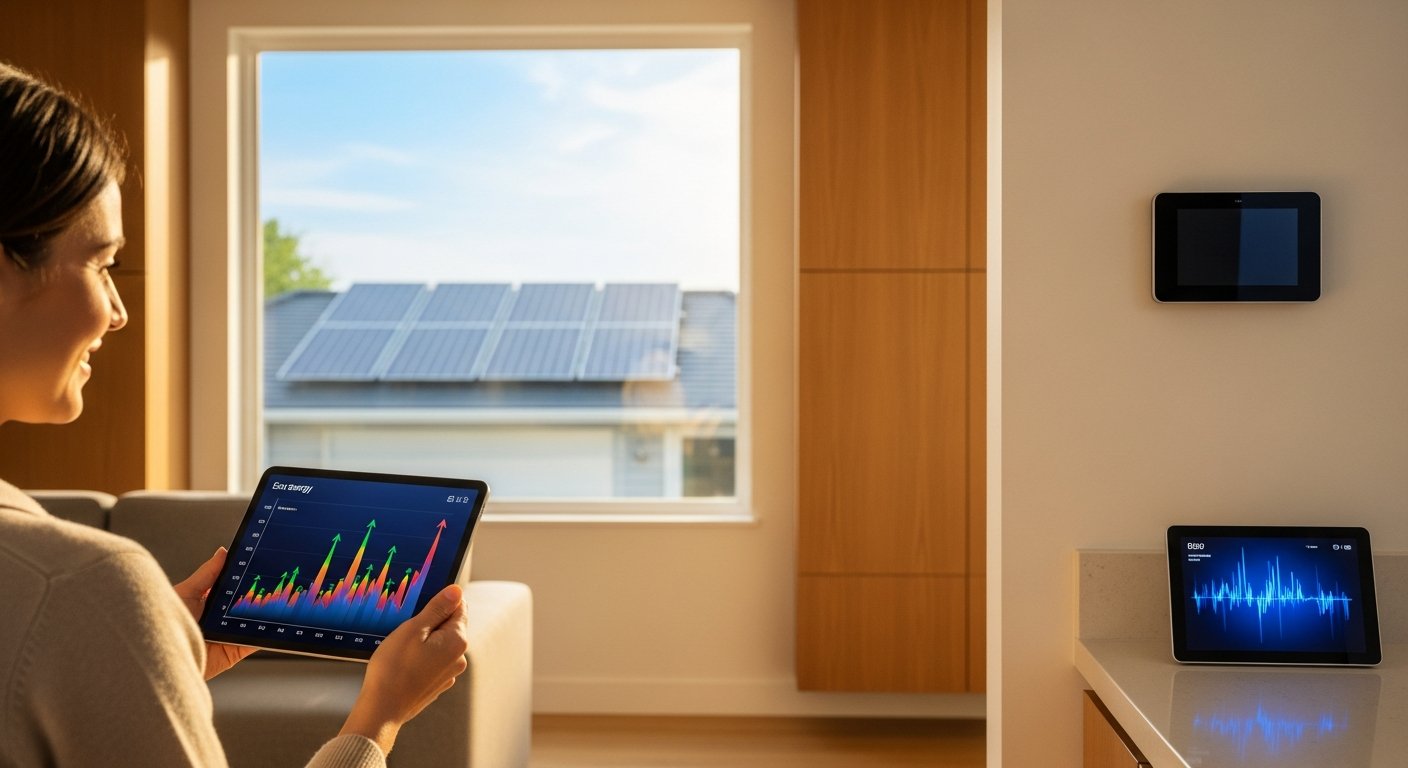
How Solar Analytics Slash Energy Bills
Discover how solar analytics turn raw energy data into real savings, boosting your system's output and cutting your monthly bills.

By Owen Phillips
Learn more about Solar Panel Installation and Repair for guides, costs, and what to expect.
Compare Solar Panel Installation and Repair Pros Near You

Enter your ZIP code to compare top-rated local professionals and request free quotes.
Solar panels are a proven investment, but many homeowners leave significant savings on the table simply because they do not track their system's real-time performance. The difference between a good solar setup and a great one often comes down to the data behind it. Solar analytics transforms raw production data into actionable insights, helping you pinpoint inefficiencies, shift usage to sunnier hours, and maximize every watt your panels generate. For homeowners seeking to cut monthly costs, this data-driven approach is no longer optional; it is the smartest way to protect your return on investment.
Think of your solar array as a power plant on your roof. Without monitoring, you are flying blind. Solar analytics acts as your control room, showing you exactly what is happening at any moment, from panel-level output to grid consumption. This visibility lets you catch issues early, from a shaded panel to an inverter fault, before they quietly drain your savings. More importantly, it gives you the knowledge to adjust your habits and appliances for maximum financial benefit.
What Is Solar Analytics and How Does It Work?
At its core, solar analytics is the practice of collecting, measuring, and interpreting data from your solar energy system. This includes production data from your inverter or panel-level optimizers, consumption data from your utility meter or home energy monitor, and even weather forecasts and grid pricing signals. The goal is to turn this raw data into clear, actionable insights about your energy production and usage.
Modern solar analytics platforms, like those offered by SolarEnergy.ai, use sophisticated algorithms to compare your system's actual output against its expected performance. This baseline is calculated using factors like your panel's efficiency rating, tilt, orientation, and local weather patterns. When the system detects a drop in performance, it flags it immediately, allowing you or your installer to address the issue quickly. This proactive approach is far more effective than waiting for your monthly utility bill to reveal a problem.
Beyond simple monitoring, advanced analytics can simulate different scenarios. For example, you can see the financial impact of adding a battery, changing your thermostat schedule, or shifting your laundry to midday hours. This what-if analysis turns your solar system into a strategic financial tool, not just a piece of equipment.
The Role of AI in Solar Analytics
The newest wave of solar analytics leverages artificial intelligence and machine learning to deliver even deeper insights. AI algorithms can learn your household's unique consumption patterns and automatically optimize your energy usage without you lifting a finger. They can forecast solar production based on cloud cover and weather radar, then pre-charge your battery or adjust your water heater to take advantage of predicted sun.
For instance, an AI system might notice that you usually run your dishwasher in the evening. It could then suggest, or even automate, running it at 1 PM when your panels are producing the most electricity. This process, known as load shifting, directly reduces the amount of grid power you consume, leading to immediate savings on your electricity bill. These smart systems are the next step in making solar energy truly autonomous and cost-effective.
In our guide on AI solar analytics explained, we dive deeper into how these intelligent systems can unlock significant energy savings with minimal effort.
Key Benefits of Using Solar Analytics
Implementing a robust solar analytics solution offers a wide range of benefits that go beyond simply checking if your panels are working. Here are the most impactful advantages for the average homeowner:
- Maximized Energy Production: Continuous monitoring ensures your system operates at peak efficiency. You will be alerted to any underperforming panels or inverter issues immediately, allowing for quick fixes that restore full output.
- Lower Electricity Bills: By understanding your production and consumption patterns, you can shift your heavy electricity use to times when your solar panels are generating the most power. This reduces the amount of expensive grid electricity you buy.
- Early Fault Detection: Analytics can detect subtle changes in performance that might indicate a problem, such as a failing micro-inverter or a buildup of dirt on a panel. Catching these issues early can prevent costly repairs and lost energy production.
- Better Investment Returns: By optimizing performance and extending the life of your equipment, analytics helps you achieve a faster and higher return on your solar investment.
- Informed Decisions: Data from your analytics platform can guide future upgrades, such as adding battery storage or expanding your panel array, based on your actual energy needs rather than guesswork.
These benefits combine to create a compelling case for any solar owner. The ability to see exactly where your energy goes and how much your panels are saving you every day is empowering. It turns the abstract concept of going solar into a tangible, measurable financial win.
How to Use Solar Analytics to Save Money
Having access to data is one thing, but knowing how to act on it is where the real savings happen. Here is a practical, step-by-step approach to using solar analytics to reduce your monthly energy bills:
- Set Up Real-Time Monitoring: Ensure you have access to a monitoring dashboard that shows your production and consumption in real time or near real time. Most modern solar systems come with this, but if yours is older, consider adding a smart meter or energy monitor.
- Identify Your Peak Usage Hours: Look at your analytics dashboard to see when your home consumes the most electricity. Is it in the morning before work, or in the evening when everyone is home? This is your target for load shifting.
- Shift Major Loads to Solar Hours: Use timers or smart plugs to run energy-hungry appliances like dishwashers, washing machines, and pool pumps during the middle of the day when your panels are producing the most power. This directly substitutes grid power with free solar power.
- Monitor for Performance Drops: Check your analytics regularly for any unexpected dips in production. If you see a pattern of lower output on a sunny day, it may indicate a shading issue, a dirty panel, or a technical fault. Address issues promptly to avoid long-term energy loss.
- Use Alerts and Reports: Set up custom alerts to notify you of significant performance changes. Many platforms also offer monthly or weekly reports that summarize your savings and suggest further optimizations.
Following these steps can lead to a noticeable reduction in your utility bills, often by 10% to 20% on top of what you are already saving with solar. The key is consistent attention and a willingness to adapt your habits based on the data you see.
Choosing the Right Solar Analytics Platform
Not all solar analytics tools are created equal. When selecting a platform, look for one that offers more than just a simple production meter. A high-quality solution should provide detailed consumption data, weather forecasting, and actionable alerts. The user interface should be intuitive, so you can easily understand your system's performance at a glance.
Consider platforms that integrate seamlessly with your existing solar equipment. Some are proprietary to specific inverter brands, while others are agnostic and can work with various hardware. The best choice for you will depend on your system's configuration and your personal comfort with technology. However, a universal platform that works with any system and offers advanced AI features is often the most future-proof and convenient option.
For a comprehensive look at the different platforms available, you can explore our analysis of solar analytics platforms that help you slash bills with smart energy management. This resource can help you compare features and find the right fit for your home.
Solar Analytics and Battery Storage
If you have a home battery, solar analytics becomes even more critical. The software can intelligently manage your battery's charge and discharge cycles to maximize savings. For example, it might store excess solar power during the day and then discharge it during peak evening hours when electricity rates are highest, a process known as arbitrage.
Advanced analytics can also factor in time-of-use (TOU) rates from your utility. It will automatically charge your battery from the grid during off-peak hours if the electricity is cheap enough, then use that stored power to avoid buying expensive electricity during peak times. This level of optimization can significantly increase your energy independence and reduce your reliance on the grid.
The intelligence of your analytics platform directly impacts how much value you get from your battery. A basic system will only charge the battery when the sun is shining, while a smart system will consider weather forecasts, your consumption history, and electricity prices to make the most economical decision at any given moment.
Overcoming Common Challenges
While solar analytics offers immense value, there are a few common hurdles you might face. The first is data overload. Many platforms provide so much information that it becomes overwhelming. The solution is to focus on a few key metrics, such as daily production, daily consumption, and system health alerts, rather than getting lost in the weeds.
Another challenge is connectivity. Analytics platforms rely on a stable internet connection to transmit data from your inverter to the cloud. If your Wi-Fi is unreliable or your inverter is in a poor signal area, you may experience data gaps. Using a wired Ethernet connection or a cellular backup can help mitigate this issue.
Finally, there is the challenge of inaction. Simply having the data is not enough; you must be willing to act on it. This might mean changing your daily routine or calling a technician to fix a minor issue. Remember that every action you take to optimize your system directly translates to more money in your pocket.
The Financial Impact of Proactive Monitoring
The financial benefits of solar analytics are not just theoretical. Studies and real-world data show that monitored solar systems produce up to 20% more energy than unmonitored ones over their lifetime. This is because problems are detected and resolved quickly, preventing long periods of reduced output.
For a typical residential system that produces 10,000 kWh per year at a rate of $0.15 per kWh, a 20% increase in efficiency translates to an additional $300 in savings annually. Over a 25-year system lifespan, that is an extra $7,500 in your pocket. This figure easily justifies the small cost of a high-quality analytics platform, making it one of the best investments for any solar homeowner.
Moreover, analytics can prevent surprise utility bills. By tracking your net metering credits and consumption, you can always know your financial standing with the utility company, avoiding end-of-year settlement shocks. This proactive approach to energy management is a cornerstone of financial planning for any solar home.
To understand the foundational importance of this technology, read our piece on why solar analytics matter for home energy savings. It provides a deeper look into the core principles that make this technology so effective.
Future Trends in Solar Analytics
The field of solar analytics is evolving rapidly. The future points towards even more sophisticated AI that can predict equipment failures before they happen, scheduling maintenance automatically. We are also seeing a trend towards community solar analytics, where data from multiple homes is aggregated to help stabilize the local grid.
Another emerging trend is the integration of solar analytics with smart home systems. Your solar system, battery, electric vehicle charger, and major appliances will all communicate with each other to optimize energy use across your entire property. This whole-home energy management approach promises to deliver even greater savings and convenience.
As these technologies mature, the role of the homeowner will shift from active manager to passive beneficiary. Your system will simply learn your preferences and automatically make the best energy decisions for you. This seamless, intelligent optimization is the ultimate goal of solar analytics.
Solar analytics is not just a technical feature; it is a financial tool that puts you in control of your energy future. By monitoring, understanding, and acting on your system's data, you can maximize your savings, protect your investment, and enjoy the full benefits of your solar power system for decades to come. The transition to smart solar management starts with a single, simple step: start paying attention to the data.
Learn more about Solar Panel Installation and Repair for guides, costs, and what to expect.
Compare Solar Panel Installation and Repair Pros Near You
Enter your ZIP code to compare top-rated local professionals and request free quotes.