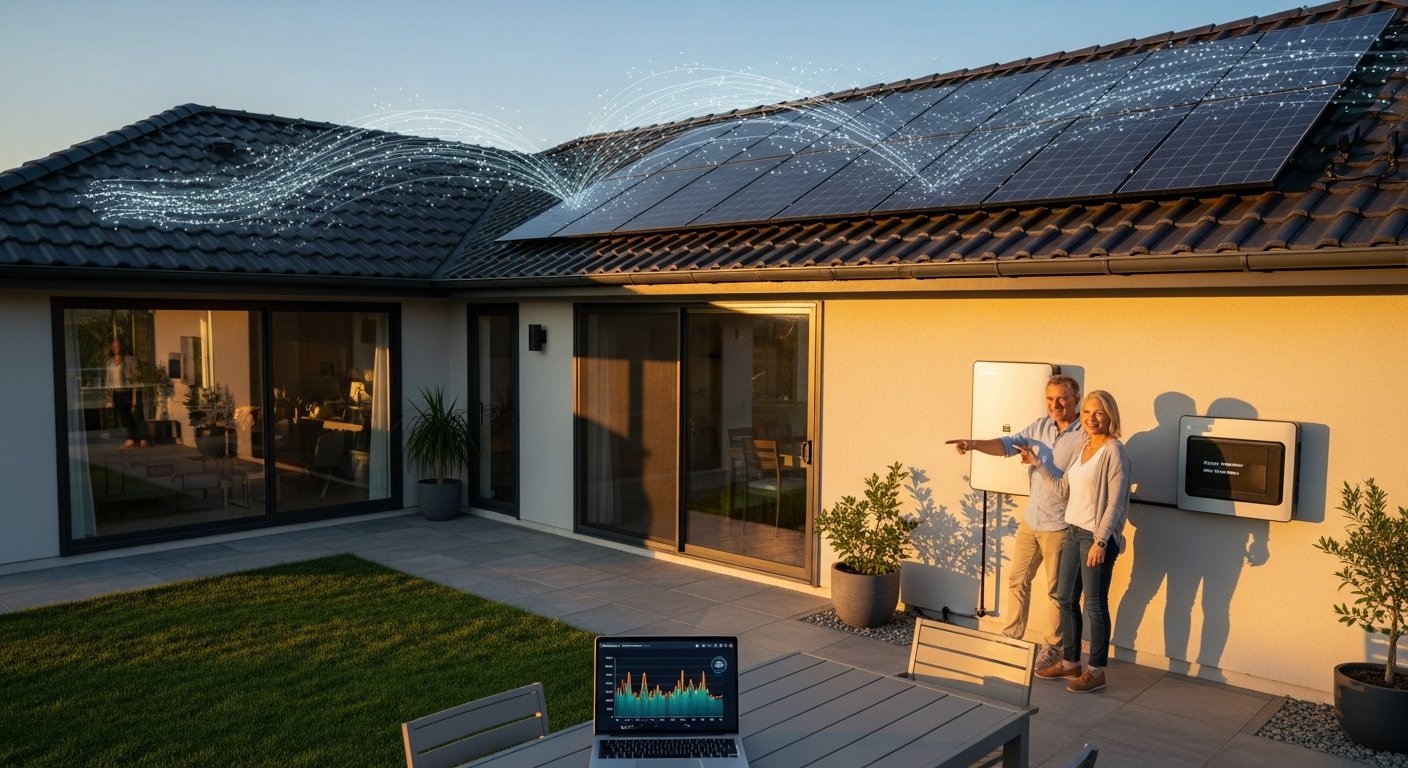
How AI Cuts Home Solar Costs and Boosts Savings
Discover how artificial intelligence in renewable energy can cut your electricity bills by up to 30% through smart forecasting and automated savings.

By Owen Phillips
Learn more about Solar Panel Installation and Repair for guides, costs, and what to expect.
Compare Solar Panel Installation and Repair Pros Near You

Enter your ZIP code to compare top-rated local professionals and request free quotes.
The shift to renewable energy has moved far beyond installing a few panels on a roof. Homeowners today face a complex web of decisions: system sizing, battery storage, time-of-use rates, and weather patterns all affect the bottom line. This is where artificial intelligence in renewable energy is changing the game. AI is no longer a futuristic concept; it is a practical tool that helps families squeeze more value from every kilowatt their solar panels produce. By analyzing vast amounts of data in real time, AI systems can make split-second decisions that a human simply cannot, leading to significant annual savings and a faster return on investment.
For the average homeowner, the promise of solar power is straightforward: generate clean electricity and pay less to the utility company. Yet, the path to maximum savings is rarely linear. Cloud cover, seasonal sun angles, and shifting household energy demands create constant variability. Traditional solar setups operate on a fixed schedule, but AI-powered systems learn and adapt. They predict your home's energy needs, forecast solar generation, and automatically manage consumption to protect you from high grid prices. This article explores the concrete ways AI is making solar energy more intelligent, more affordable, and more accessible for American households.
Understanding AI in Modern Solar Systems
Artificial intelligence in renewable energy acts as the brain behind the hardware. While solar panels and inverters are the muscles that capture and convert sunlight, AI software provides the intelligence that decides when to store power, when to sell it back to the grid, and when to draw from the battery. This is achieved through machine learning algorithms that process historical weather data, local electricity rates, and your unique consumption patterns. Over time, the system builds a predictive model of your home's energy profile, allowing it to optimize performance automatically.
For example, an AI system might learn that your household uses the most electricity between 6 PM and 9 PM. It will then instruct the battery to hold onto stored solar energy during the afternoon, rather than exporting it for a low credit, so that you can avoid paying peak rates later in the evening. This level of automation ensures that you are never leaving savings on the table. As you consider upgrading your system, exploring AI renewable energy options for homeowners can reveal just how much control you can gain over your utility bills.
Optimizing Energy Consumption with Smart Forecasting
One of the most powerful applications of AI is predictive forecasting. Instead of reacting to energy prices after they spike, AI tools anticipate them. By analyzing local weather services and grid demand signals, the system knows when a cloudy day will reduce solar output. In response, it pre-charges your battery during cheaper, off-peak hours the night before. This proactive approach is a stark contrast to older systems that only react to current conditions.
This forecasting ability directly translates to financial benefits. Consider a homeowner with an electric vehicle (EV). Charging a car battery can double a household's daily electricity usage. AI can schedule that charging session for the exact moment when your solar panels are producing a surplus, or when grid electricity is cheapest. Without this intelligence, you might accidentally plug in your car during peak demand, erasing the savings generated by your solar array. Furthermore, AI continuously monitors the health of your panels and inverter, alerting you to potential maintenance issues before they become costly failures. This includes tracking renewable energy software essentials for savings that help you monitor performance metrics in real time.
The Financial Impact: Lower Bills and Better ROI
The primary motivation for most homeowners is financial. AI enhances the return on investment (ROI) of a solar installation by increasing the amount of self-consumed energy. When you use the solar power you generate directly, you avoid paying retail electricity rates, which are often three to four times higher than the wholesale rate utilities pay for excess solar energy. AI maximizes self-consumption by shifting your heavy appliance usage, like laundry or dishwashing, to times when solar generation is high.
Here are the key financial levers that AI pulls to increase your savings:
- Peak Shaving: AI automatically switches your home to battery power during expensive peak hours, avoiding high demand charges.
- Rate Arbitrage: The system charges batteries from the grid when rates are low and discharges them when rates are high, even without sunlight.
- Demand Response: AI can temporarily reduce non-essential loads during grid stress periods, earning you rebates from utility programs.
- Dynamic Tariff Alignment: It constantly updates its strategy based on your utility's specific tariff structure, ensuring you always use the cheapest available power source.
These mechanisms work together to shave 20% to 30% off the remaining grid electricity bill for the average household. Over the 25-year lifespan of a typical solar panel system, this adds up to thousands of dollars in recovered costs. For those who want to see the numbers for their own property, using a dedicated AI renewable energy savings solution can provide a personalized estimate of how much money you could save annually.
Overcoming the Duck Curve and Grid Stability
The rise of solar power has introduced a phenomenon known as the "duck curve." This occurs when solar production peaks in the afternoon, but demand peaks in the evening after the sun sets. Without intervention, this creates a steep ramp in power plant generation, which is inefficient and strains the grid. Artificial intelligence in renewable energy offers a solution by smoothing out this curve through smart battery dispatch.
AI systems can store afternoon solar energy and release it during the evening peak, effectively flattening the curve for your household. This not only stabilizes the grid but also allows utilities to rely more heavily on renewables without risking blackouts. For homeowners, this means their solar investment helps the wider community, and in some states, utilities offer financial incentives for customers who participate in these "virtual power plant" programs. By aggregating thousands of AI-controlled home batteries, utilities can draw on this stored power during emergencies, paying participating homeowners for the service.
Practical Steps to Implement AI at Home
Transitioning to an AI-optimized solar setup is easier than many homeowners think. It does not require replacing your existing solar panels. The core upgrade is usually the inverter and the energy management software. Modern smart inverters come equipped with AI capabilities, while retrofitted monitoring systems can add intelligence to older installations. When shopping for a new system, you should look for equipment that offers built-in machine learning and dynamic load management.
To get started, follow these steps:
- Audit Your Energy Profile: Review your last 12 months of utility bills to understand your seasonal usage patterns.
- Choose AI-Ready Hardware: Select an inverter and battery system that explicitly supports AI-driven optimization and open API connectivity.
- Integrate Smart Appliances: Connect major loads like EV chargers, heat pumps, and water heaters to the AI system so it can control them.
- Monitor and Adjust: Use the mobile app to check performance weekly, and allow the AI at least one month to learn your habits fully.
After the system has gathered sufficient data, you will notice the AI beginning to automate decisions that you used to make manually. It will start pre-cooling your home before peak rates hit, or delay the pool pump until the sun is high in the sky. This hands-off management is the ultimate convenience, ensuring that your home is always running at peak efficiency without requiring constant attention from you.
The Future of Home Energy Management
Looking ahead, the role of AI in renewable energy is set to expand dramatically. We are moving toward fully autonomous home energy ecosystems where the grid, the home, and the electric vehicle communicate seamlessly. Imagine a system that not only manages your solar power but also decides when to sell electricity to your neighbor's EV during a grid event. This peer-to-peer energy trading is already being piloted in several states, powered by blockchain and AI.
Furthermore, AI will play a crucial role in optimizing the production of green hydrogen for residential fuel cells and in managing the aging of battery packs to extend their life. As these technologies mature, the initial cost of AI integration will continue to fall. For now, the most significant barrier is simply awareness. Many homeowners are still using "dumb" solar systems, losing 15% to 25% of their potential savings because no one is watching the market for them.
In conclusion, artificial intelligence in renewable energy is not just a technological upgrade; it is a financial imperative for modern homeowners. It turns a static solar installation into a dynamic, profit-generating asset. By forecasting, learning, and automating, AI ensures that every ray of sunlight is used to its full potential. If you are considering solar, or already have a system, asking about AI integration should be your first question. The savings you unlock today will compound for decades, making your home more resilient, more sustainable, and significantly cheaper to run.
Learn more about Solar Panel Installation and Repair for guides, costs, and what to expect.
Compare Solar Panel Installation and Repair Pros Near You
Enter your ZIP code to compare top-rated local professionals and request free quotes.