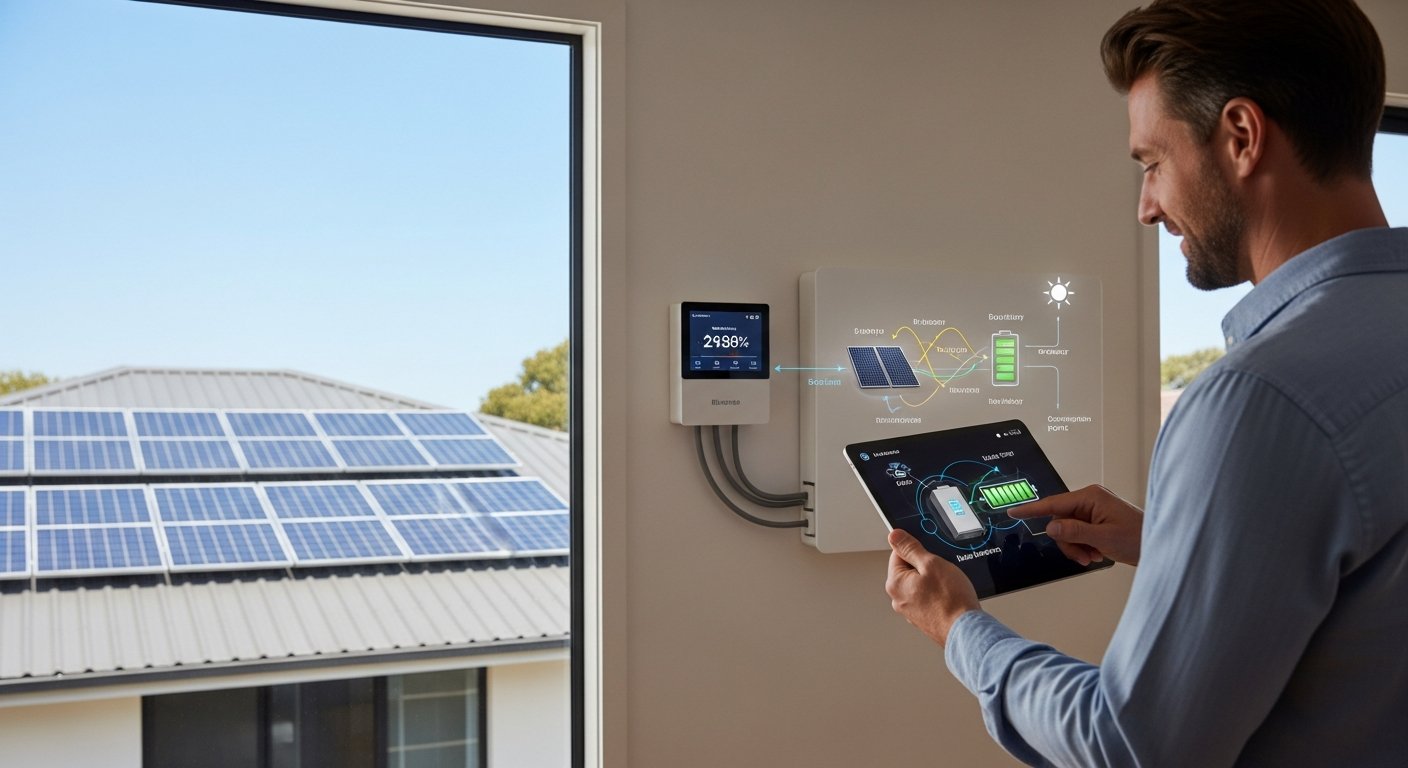
Cut Bills With an Energy Management Platform for Solar Homes
An energy management platform optimizes solar production, battery storage, and home usage to cut electricity bills by 15-30%.

By Owen Phillips
Learn more about Solar Panel Installation and Repair for guides, costs, and what to expect.
Compare Solar Panel Installation and Repair Pros Near You

Enter your ZIP code to compare top-rated local professionals and request free quotes.
Rising electricity costs and a growing desire for energy independence are driving homeowners to rethink how they consume and generate power. Solar panels are a proven solution, but their full potential often remains untapped without intelligent oversight. An energy management platform bridges this gap, transforming a static solar installation into a dynamic, cost-saving asset. By coordinating solar production, battery storage, and household consumption in real time, these systems help homeowners slash utility bills, reduce reliance on the grid, and make the most of every kilowatt-hour generated. This guide explores how an energy management platform works, why it matters for solar homeowners, and how to choose the right solution for your home.
What Is an Energy Management Platform?
An energy management platform (EMP) is a software-based system that monitors, controls, and optimizes energy flows within a home or building. It connects to solar inverters, battery storage units, smart appliances, and utility meters to provide a unified view of energy production and consumption. The platform uses real-time data and advanced algorithms to automate decisions: charging batteries when solar output is high, shifting load to off-peak hours, or even selling excess power back to the grid when prices are favorable.
For solar homeowners, an EMP is the brain behind the panels. Without it, you might rely on static timers or manual adjustments that miss opportunities for savings. With it, the platform continuously learns your habits, weather patterns, and time-of-use rates to execute a strategy that maximizes self-consumption of solar energy. In our guide on AI energy management platform, we explain how artificial intelligence elevates this capability even further.
How an Energy Management Platform Works With Solar
At its core, an EMP collects data from multiple sources:
- Solar inverters: track how much energy your panels generate in real time.
- Smart meters: monitor grid import and export, as well as time-of-use pricing.
- Battery management systems: report state of charge, capacity, and health.
- Connected appliances: including HVAC, water heaters, EV chargers, and smart plugs.
Once data is aggregated, the platform applies rules or machine learning models to control devices. For example, on a sunny afternoon, it might divert excess solar power to charge your electric vehicle instead of sending it to the grid at a low feed-in tariff. During a peak-rate evening, it could discharge the battery to power your home, avoiding expensive utility charges. Over a month, these micro-decisions compound into substantial savings.
This intelligent orchestration is especially valuable for homes with time-of-use plans or net metering policies that vary by hour. The platform can also provide alerts: a sudden drop in solar production might indicate a panel issue, or a surge in consumption could point to a faulty appliance. For a deeper dive into how AI powers these decisions, see our solar energy management explained article.
Key Benefits of Using an Energy Management Platform
Adopting an EMP goes beyond simple monitoring. It delivers tangible financial and operational advantages for solar homeowners.
1. Lower Electricity Bills
By shifting consumption to times when solar generation is high or grid rates are low, an EMP reduces the amount of energy you buy from the utility. Some users report 15 to 30 percent reductions in monthly bills after installing a platform. The savings come from both self-consumption and strategic battery discharge during peak periods.
2. Increased Solar ROI
Solar panels pay back faster when you use more of the energy they produce. An EMP ensures that excess solar power is stored or used rather than exported at low rates. This improves the financial return on your solar investment, especially in markets where net metering compensation has declined.
3. Enhanced Backup Power Reliability
During a grid outage, an EMP can automatically island your home, directing solar and battery power to essential loads. Advanced platforms prioritize circuits: keeping the refrigerator, lights, and internet running while non-critical loads are shed. This seamless transition adds peace of mind for homeowners in areas prone to blackouts.
4. Environmental Impact
Maximizing self-consumption of solar energy reduces your carbon footprint further. An EMP also supports grid stability by smoothing demand spikes, which can reduce the need for fossil-fuel peaker plants. For eco-conscious homeowners, this aligns with broader sustainability goals.
Essential Features to Look For
Not all energy management platforms are created equal. When evaluating options for your solar home, consider these critical capabilities:
- Real-time monitoring dashboard: a clear, mobile-friendly interface showing production, consumption, battery status, and grid interaction.
- Automated load control: ability to turn devices on or off based on rules, schedules, or price signals.
- Battery optimization algorithms: sophisticated logic that accounts for weather forecasts, battery degradation, and tariff structures.
- EV charging integration: smart scheduling that prioritizes solar excess or off-peak charging for electric vehicles.
- API or open protocol support: compatibility with a wide range of hardware brands, such as Tesla, Enphase, SolarEdge, or Sonnen.
Beyond these, look for platforms that offer historical analytics and reporting. Understanding your energy patterns over months helps identify further savings opportunities. Some platforms also provide virtual power plant (VPP) participation, where your battery can be aggregated with others to support the grid in exchange for compensation.
Choosing the Right Platform for Your Home
Selecting an EMP involves matching your specific hardware, goals, and technical comfort level. Here is a step-by-step approach:
- Audit your existing equipment. List your solar inverter brand, battery model (if any), and smart appliances. Check compatibility with popular platforms like Enphase Enlighten, Tesla Gateway, or third-party solutions such as Home Assistant or Emporia.
- Define your primary objective. Is it maximum bill reduction, backup reliability, or carbon footprint minimization? Different platforms prioritize these goals differently.
- Evaluate ease of use. Some platforms are designed for tech-savvy DIYers, while others offer professional setup and white-glove support. Choose one that matches your comfort level.
- Consider future expansion. If you plan to add more solar capacity, another battery, or an EV charger, ensure the platform can scale without needing a complete overhaul.
- Review subscription costs. Some platforms are free with hardware purchase; others charge a monthly fee for advanced features. Calculate the net savings to see if the fee is justified.
Many homeowners start with the platform provided by their inverter manufacturer, then upgrade to a more advanced solution as their needs grow. For instance, Enphase solar owners can use the Enphase app for basic monitoring, but may add a third-party platform like Sense or Solar Analytics for deeper insights.
Real-World Savings Examples
To illustrate the impact, consider a typical 6 kW solar system in California paired with a 10 kWh battery. Without an EMP, the homeowner might charge the battery fully by noon and then export excess solar at a low rate. The battery would then discharge during peak hours, but only if manually scheduled. With an EMP that incorporates weather forecasts and hourly pricing, the system can hold the battery charge until the highest-rate evening period, potentially saving an extra $30 to $60 per month. Over a year, that adds up to $360 to $720 in additional savings.
Another example: a homeowner with an electric vehicle uses an EMP to charge the car exclusively from solar surplus on sunny days. Over a month, this could replace 200 kWh of grid charging at $0.30/kWh, saving $60. Combined with optimized battery use, total monthly savings can exceed $100, significantly accelerating the payback period of the solar and battery system.
Integrating With AI and Advanced Automation
The next generation of energy management platforms leverages artificial intelligence to predict solar generation and consumption patterns with high accuracy. Machine learning models analyze historical weather data, local cloud cover forecasts, and your daily routines to pre-charge the battery before a cloudy stretch or pre-cool your home before a peak-price event. This proactive approach outperforms simple rule-based systems.
SolarEnergy.ai offers solutions that incorporate these advanced capabilities. By combining solar expertise with AI-driven optimization, homeowners can achieve the highest possible efficiency from their renewable energy investments. For an overview of how these systems work in practice, read our article on AI energy management systems and how they cut bills while accelerating the transition to solar.
Common Challenges and How to Overcome Them
While EMPs offer substantial benefits, adoption can come with hurdles:
- Compatibility issues: not all devices speak the same protocol. Look for platforms that support industry standards like Modbus, SunSpec, or Zigbee.
- Complex setup: some platforms require technical knowledge to configure rules and integrations. Consider hiring a professional installer or choosing a platform with guided setup.
- Data privacy concerns: energy data reveals when you are home and how you use appliances. Ensure the platform encrypts data and offers local processing options where possible.
- Over-reliance on internet connectivity: if your Wi-Fi goes down, some platforms lose functionality. Opt for systems that can continue basic operations even offline.
Addressing these challenges upfront ensures a smooth experience. Many platform vendors now offer hybrid cloud-local architectures that keep critical functions running during an outage.
The Future of Home Energy Management
As more homes adopt solar, batteries, and EVs, the role of the energy management platform will expand. We are moving toward a future where homes participate actively in the energy market, selling flexibility to utilities and aggregators. Platforms will become the central hub for transactive energy: automatically buying and selling power based on real-time prices and grid conditions.
Emerging trends include vehicle-to-home (V2H) and vehicle-to-grid (V2G) integration, allowing your EV to act as a mobile battery. Additionally, standards like IEEE 2030.5 and OpenADR are making interoperability easier, so a single platform can manage devices from multiple manufacturers seamlessly. For solar homeowners, investing in a capable EMP today is a step toward future-proofing your energy system.
An energy management platform is no longer a luxury for early adopters. It is a practical tool that turns solar panels from a passive investment into an active, money-saving system. Whether you are new to solar or looking to upgrade an existing setup, evaluating EMP options will help you achieve lower bills, greater energy independence, and a cleaner footprint. Start by auditing your current hardware, defining your savings goals, and exploring platforms that align with your needs. The right choice can make a difference of hundreds of dollars per year while giving you peace of mind and control over your home's energy future.