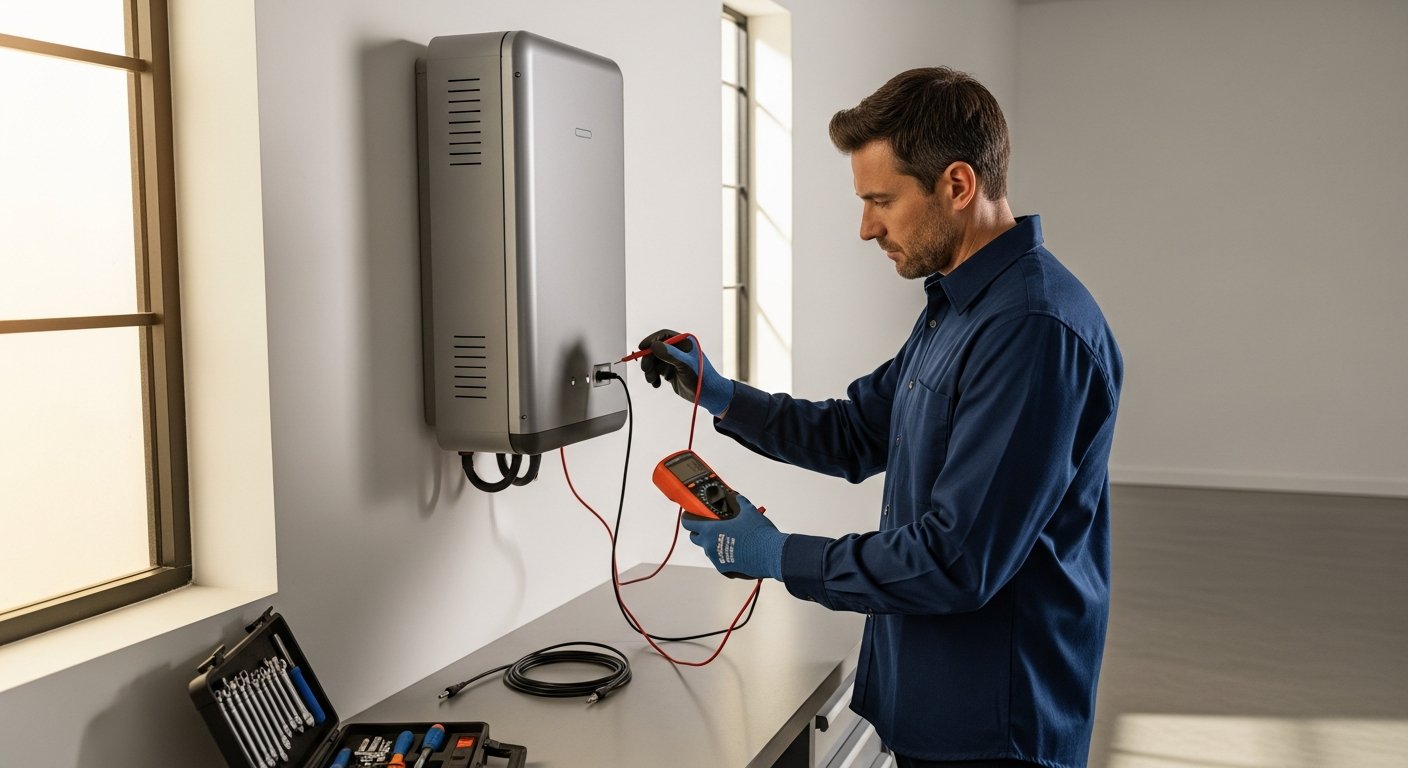
Battery Maintenance: Extend Solar Storage Lifespan
Learn essential battery maintenance steps to extend solar storage lifespan, boost efficiency, and protect your home energy investment.

By Dylan Harris
Learn more about Solar Panel Installation and Repair for guides, costs, and what to expect.
Compare Solar Panel Installation and Repair Pros Near You

Enter your ZIP code to compare top-rated local professionals and request free quotes.
Your solar battery is the silent workhorse of your home energy system. It stores the sun's power for evening use, keeps essential appliances running during outages, and helps you maximize every kilowatt your panels produce. Yet many homeowners overlook the one practice that protects this investment: regular battery maintenance. A well-maintained battery can deliver reliable service for 10 to 15 years, while a neglected one may fail in half that time. This guide walks you through the essential steps, common pitfalls, and smart strategies to keep your solar storage performing at its peak.
Why Battery Maintenance Matters for Solar Homes
Solar batteries are not set-and-forget devices. They rely on chemical reactions that degrade naturally over time, but the rate of degradation depends heavily on how you treat them. Proper battery maintenance ensures that your system operates efficiently, safely, and economically. Without it, you risk reduced capacity, unexpected shutdowns, and even safety hazards like overheating or swelling.
For homeowners who invested in solar to lower electricity bills and gain energy independence, battery health directly impacts financial returns. A degraded battery stores less energy, which means you pull more power from the grid during peak hours. Over a year, that adds up. In contrast, a well-maintained battery maximizes your self-consumption, reducing reliance on utility power and protecting you from rate hikes.
Consider the typical scenario: a family installs a 10 kWh battery to cover their evening usage. If the battery operates at 80% health, they lose 2 kWh of storage each day. At an average electricity rate of $0.15 per kWh, that is a $0.30 daily loss, or about $110 per year. Over a decade, that is over $1,000 in wasted potential. Battery maintenance is not just a technical chore; it is a financial strategy.
Key Factors That Affect Battery Lifespan
Before diving into maintenance tasks, it helps to understand what stresses your battery. Several factors determine how quickly a battery ages, and knowing these allows you to make informed decisions about usage and care.
- Depth of discharge (DoD): This is the percentage of capacity you use before recharging. A battery discharged to 20% is stressed more than one discharged to 50%. Most lithium-ion batteries handle 80% DoD well, but deeper cycles accelerate wear.
- Temperature extremes: Batteries prefer moderate temperatures. Heat speeds up chemical reactions, causing faster degradation. Cold reduces capacity temporarily and can damage cells if charging occurs below freezing.
- Charge cycles: Every full discharge and recharge counts as one cycle. Batteries have a rated cycle life, typically 4,000 to 6,000 cycles for lithium-ion. Partial cycles are gentler, so frequent shallow discharges extend calendar lifespan.
- Charge rate: Fast charging generates heat and stresses the battery. Most home systems use a standard charge rate, but if you have a high-power inverter, you may need to limit charging speed.
These factors are interconnected. For example, operating in a hot garage can worsen the effect of deep discharges. The best approach is to create a maintenance routine that addresses all of them, starting with what you can control: your settings and environment.
Routine Battery Maintenance Tasks
Battery maintenance is not complicated, but it does require consistency. You can handle most tasks yourself, while a few need professional attention. Here is a practical checklist to follow, ideally every three to six months.
1. Visual Inspection
Start with a simple eye test. Look at the battery enclosure for cracks, bulges, or leaks. Check the area around the battery for corrosion, which often appears as a white or blue powdery substance on terminals. If you see any of these signs, contact a certified technician immediately. Do not attempt to repair physical damage yourself.
2. Terminal Cleaning
Corroded terminals disrupt the connection between your battery and your home system. To clean them, first disconnect the battery following your system's shutdown procedure. Use a wire brush or a dedicated terminal cleaner to remove buildup. Then apply a thin layer of petroleum jelly to protect against future corrosion. Reconnect the terminals and tighten them securely, but avoid overtightening, which can damage threads.
3. Software Updates
Modern batteries rely on battery management systems (BMS) that monitor and balance cells. Manufacturers release firmware updates that improve performance, fix bugs, and enhance safety. Check your battery's companion app or your installer's portal for updates. Install them promptly, as they often include critical protections against overcharging or overheating.
4. Performance Check
Most solar systems provide monitoring data through an app or web dashboard. Review your battery's state of charge (SoC) patterns over the past month. A healthy battery should charge fully during solar hours and discharge predictably in the evening. If you notice sudden drops in capacity or the battery never reaches 100%, schedule a diagnostic with a professional.
5. Ventilation and Clearance
Batteries generate heat during operation, and they need airflow to dissipate it. Ensure the area around your battery is free of dust, debris, and stored items. Maintain at least six inches of clearance on all sides, as recommended by most manufacturers. If your battery is in a garage or utility closet, keep the door open or install a small vent to improve circulation.
Performing these tasks on a schedule is wise, but also stay alert to changes. A battery that suddenly runs out faster, makes unusual noises, or displays error codes needs immediate attention. Catching problems early is the essence of effective battery maintenance.
Advanced Tips to Maximize Battery Health
Beyond the basics, you can adopt strategies that squeeze more life out of your battery. These require a bit more effort, but they pay off in longevity and performance.
Adjust Your Discharge Settings
Many systems allow you to set a minimum state of charge. If your battery supports it, raise the cutoff from 10% to 20% or 30%. This reduces depth of discharge, which extends cycle life. The trade-off is slightly less usable capacity, but for most homes, the extra 10% is rarely needed on a daily basis. You can also use time-of-use settings to discharge during peak hours only, avoiding unnecessary cycling during off-peak times.
Manage Temperature
If your battery is installed in an unconditioned space, consider adding insulation or a small heating element for winter. In summer, improve ventilation or add a fan to keep the area below 90°F (32°C). Some smart batteries have built-in thermal management, but you can still help by shading the enclosure from direct sunlight. If you live in an extreme climate, ask your installer about a climate-controlled battery cabinet.
Balance Grid and Solar Charging
Charging from the grid is sometimes necessary, especially in winter, but it can be harder on the battery than solar charging. Solar charging tends to be slower and gentler, while grid charging can be rapid. If your system allows, schedule grid charging at a lower rate or during off-peak times to reduce stress. Many utilities offer incentives for using battery storage during peak demand, so you can align your settings to earn credits while protecting your battery.
Schedule Professional Inspections
Even with diligent DIY care, an annual professional inspection is a wise investment. A technician can run diagnostic tests, verify the BMS is functioning correctly, and check the electrical connections for resistance. They can also update firmware that you may have missed. This service typically costs $100 to $200, but it can prevent costly failures down the road.
These advanced practices are especially relevant for homeowners with larger systems or those who rely heavily on backup power. The more you depend on your battery, the more important it is to keep it in top condition.
Common Battery Maintenance Mistakes to Avoid
Even well-intentioned homeowners make errors that harm their batteries. Here are the most frequent pitfalls and how to steer clear of them.
- Ignoring error codes: A blinking light or warning message is your battery's way of asking for help. Ignoring it can lead to deeper damage. Always look up the code in your manual and act accordingly.
- Overcharging: Leaving your battery at 100% for long periods stresses the cells. If you know you will not use the battery for a few days, set a lower maximum charge, like 80%.
- Using the wrong charger: Solar batteries are designed to work with specific charge controllers. Using a third-party charger can cause overvoltage or improper charging profiles.
- Performing DIY repairs: Opening a battery enclosure is dangerous and voids warranties. Always hire a certified technician for any internal issue.
- Neglecting firmware updates: As mentioned earlier, updates are critical for safety and efficiency. Skipping them leaves your battery vulnerable to known issues.
Each of these mistakes is preventable with a little knowledge and discipline. The cost of a professional inspection is far lower than the cost of replacing a battery prematurely.
How Battery Maintenance Supports Your Solar Investment
Your solar panels produce energy for 25 years or more, but your battery may only last half that time. Proper battery maintenance bridges that gap, ensuring your storage system remains reliable throughout its expected lifespan. This is not just about avoiding problems; it is about getting the most value from your entire solar installation.
A healthy battery also enhances your home's resilience. In an outage, a well-maintained battery can power your fridge, lights, and medical devices for hours. That peace of mind is hard to quantify, but it is a primary reason many homeowners add storage in the first place. By following the maintenance steps above, you protect that safety net.
Furthermore, if you participate in demand response programs or sell excess power back to the grid, battery health directly affects your earnings. Utilities pay for reliable capacity, and a degraded battery may not qualify for incentives. Keeping your battery in top shape ensures you can take advantage of these opportunities when they arise.
Finally, consider the environmental angle. Batteries contain materials that require significant resources to extract and process. Extending their lifespan reduces waste and lowers the carbon footprint of your energy system. In a world that increasingly values sustainability, battery maintenance is a small but meaningful act.
Your battery is an investment that deserves regular attention. By committing to a simple maintenance routine, you ensure it delivers clean, reliable power for years to come. Whether you are a new solar owner or have had panels for a decade, start today by checking your battery's health and schedule your next professional inspection. Your future self, and your wallet, will thank you.
Learn more about Solar Panel Installation and Repair for guides, costs, and what to expect.
Compare Solar Panel Installation and Repair Pros Near You
Enter your ZIP code to compare top-rated local professionals and request free quotes.