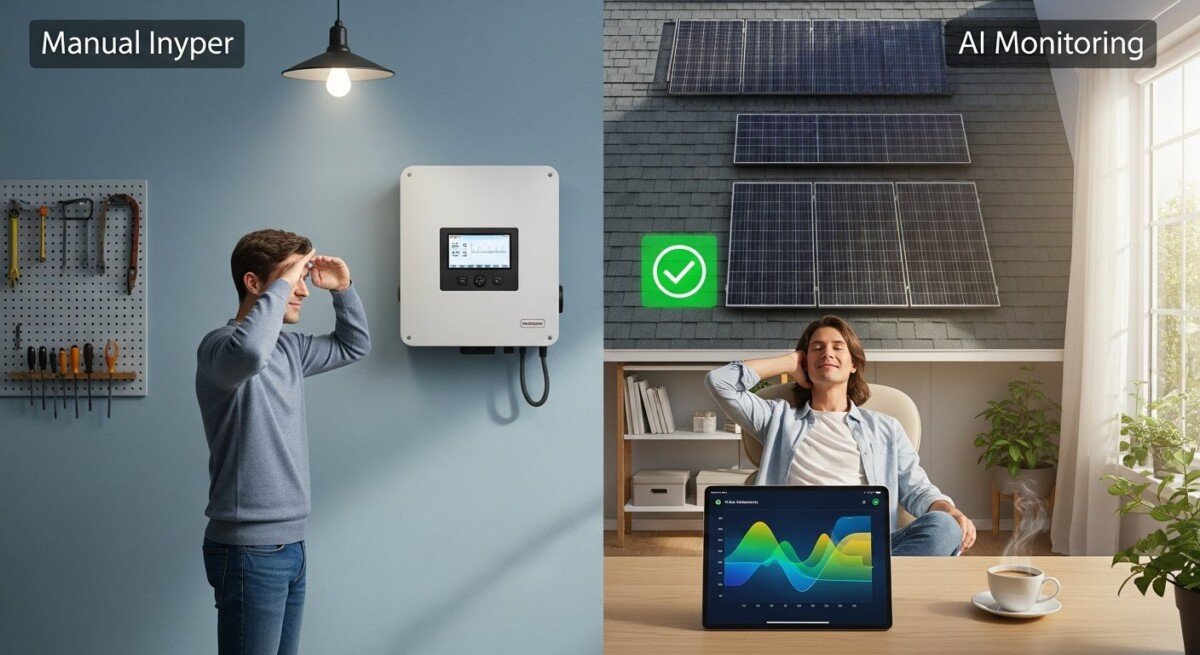
AI vs Manual Solar Monitoring: Maximize Your Home Savings
Learn the key differences between AI vs manual solar monitoring and how smart tracking can maximize your home energy savings and system performance.

By Owen Phillips
Learn more about Solar Panel Installation and Repair for guides, costs, and what to expect.
Compare Solar Panel Installation and Repair Pros Near You

Enter your ZIP code to compare top-rated local professionals and request free quotes.
You open your monthly electricity bill and feel a familiar sting. Rates keep climbing, and you wonder if there is a way to finally escape the grip of the power company. This frustration leads many homeowners to search for ai vs manual solar monitoring as they explore solar energy solutions. The promise of reducing energy bills and becoming less dependent on the grid has never been more appealing.
Solar technology has evolved rapidly, and one of the biggest decisions you will face is how to track your system’s performance. Understanding the difference between AI-powered monitoring and manual methods can help you maximize savings and avoid costly mistakes. In this guide, we break down everything you need to know to make an informed choice.
Understanding AI vs Manual Solar Monitoring
Solar monitoring is the process of tracking how much energy your panels produce and how efficiently your system operates. AI vs manual solar monitoring refers to two distinct approaches: one uses artificial intelligence to automatically analyze data and detect issues, while the other relies on you checking production numbers manually through your inverter display or basic app.
With manual monitoring, you might glance at a dashboard once a week or wait for a sudden drop in performance to notice a problem. AI-powered systems, on the other hand, constantly compare your panel output against weather patterns, historical data, and local grid conditions. They can alert you to shading issues, panel degradation, or inverter faults in real time.
More homeowners are gravitating toward AI monitoring because it removes guesswork and saves time. Instead of puzzling over a dip in production, you receive a clear notification on your phone along with a suggested fix. This proactive approach helps you maintain peak performance and protect your investment.
How AI Solar Monitoring Works
An AI monitoring system uses sensors and smart algorithms to analyze thousands of data points every minute. It learns your home’s unique energy patterns and adjusts its predictions as seasons change. If a cloud passes over or a panel gets dirty, the system accounts for it and flags unusual behavior.
Most AI platforms also integrate with weather forecasts and utility rate schedules. This allows them to recommend the best times to run heavy appliances or charge a battery. Over time, these small optimizations add up to significant savings on your electricity bills.
Why Solar Energy Is Becoming More Popular
Rising electricity prices are the number one reason homeowners are switching to solar. The cost of power from the grid has outpaced inflation for years, and there is no sign of it slowing down. Solar panels offer a way to lock in lower energy costs for decades.
Environmental concerns also play a major role. Generating your own clean energy reduces your carbon footprint and helps fight climate change. Many families feel good knowing they are contributing to a healthier planet while saving money at the same time.
Long-term savings are compelling. Most solar systems pay for themselves within 6 to 10 years through reduced electric bills, and panels last 25 years or more. That means you could enjoy 15 to 20 years of nearly free electricity after the system is paid off.
If you are considering solar power for your home, comparing installation quotes can help you understand your options. Request a free solar quote or call 1-800-SOLAR-USA to learn more.
Common Questions Homeowners Have About Solar
Many homeowners hesitate because they worry about upfront installation costs. The good news is that prices have dropped significantly over the past decade, and federal tax credits can cover 30% of your system cost. Plus, many installers offer zero-down financing options.
Roof suitability is another frequent concern. Most roofs with good sun exposure and enough space can accommodate solar panels. A professional installer will evaluate your roof’s age, material, and orientation during a free site assessment to confirm compatibility.
System performance is a top priority. Homeowners want to know their panels will produce enough power year-round. That is where AI vs manual solar monitoring becomes critical,AI systems give you real-time confidence that everything is running as expected.
- Will solar panels work during cloudy days or winter?
- How long does the installation process take?
- What happens if my panels produce more energy than I use?
- Do I need a battery backup?
- Are there government incentives available in my area?
- How does solar affect my home’s resale value?
How Solar Panel Installation Works
The installation process is straightforward when you work with a qualified professional. It begins with a home energy assessment where the installer reviews your electricity usage and roof characteristics. This step ensures the system is sized correctly for your needs.
Next, the installer designs a custom system layout and handles all necessary permits and approvals from your local utility and municipality. This paperwork can be complex, which is why working with an experienced installer saves you time and prevents costly mistakes.
Once permits are approved, the physical installation usually takes one to three days. After the panels are mounted and wired, the system is inspected and connected to the grid. Activation happens quickly, and you start generating power immediately.
- Home energy assessment and usage review
- Custom system design and equipment selection
- Permit applications and utility approvals
- Panel and inverter installation
- Final inspection and system activation
Speaking with experienced installers can help you determine the best solar solution for your home. Compare solar quotes here or call 1-800-SOLAR-USA to explore available options.
Signs Your Home May Be Ideal for Solar
Not every home is equally suited for solar, but most can benefit. Strong sunlight exposure is the most important factor. Homes with south-facing roofs that receive direct sun for most of the day will produce the most energy.
High electricity bills are a clear sign you could save by going solar. If you pay more than $100 per month, a properly sized system will likely reduce or eliminate that bill. The more you spend on electricity, the faster your solar investment pays off.
- Your roof gets at least 4,5 hours of direct sunlight daily
- Your monthly electricity bill is consistently high
- You have sufficient roof space with minimal shading
- You plan to stay in your home for at least 5,7 years
- Your roof is in good condition or recently replaced
- Your local utility offers net metering or solar incentives
What Affects Solar Installation Costs
System size is the primary cost driver. Larger systems that generate more electricity cost more upfront, but they also deliver greater long-term savings. A typical home system ranges from 5 kW to 10 kW, with prices averaging $2.50 to $3.50 per watt before incentives.
Equipment quality also matters. Premium panels and inverters from top brands cost more but often come with better warranties and higher efficiency. Choosing budget equipment might save money now but could lead to higher maintenance costs later.
Installation complexity can add to the price. Factors like roof pitch, tile materials, or the need for electrical panel upgrades increase labor costs. Local incentives and rebates can offset these expenses significantly, so it pays to research what is available in your area.
The cost of solar installation varies depending on your home and energy needs. Request personalized solar quotes or call 1-800-SOLAR-USA to see what options are available.
Tips for Choosing a Reliable Solar Installer
Selecting the right installer is just as important as choosing the right equipment. A reputable company will provide a thorough site assessment, transparent pricing, and clear contract terms. They should also handle all permits and paperwork on your behalf.
Warranties are a key indicator of quality. Look for installers who offer at least a 10-year workmanship warranty and who use panels with 25-year performance guarantees. This protects you if something goes wrong down the road.
- Review the installer’s experience and number of completed projects
- Check that they offer comprehensive warranties on both equipment and labor
- Read customer reviews on third-party sites like Google or the Better Business Bureau
- Compare at least three quotes to understand pricing and value
- Ask about their monitoring system,do they offer AI-based monitoring?
- Verify that they are licensed, insured, and certified by organizations like NABCEP
Long-Term Benefits of Installing Solar Panels
The most immediate benefit is lower electricity bills. Once your system is paid off, your monthly energy costs drop dramatically. Many homeowners see savings of $1,000 to $2,000 per year, depending on their location and energy usage.
Solar panels also increase your home’s resale value. Studies show that homes with solar systems sell for 4,6% more than comparable homes without them. Buyers are willing to pay a premium for lower utility costs and energy independence.
Energy independence is a powerful advantage. You become less vulnerable to utility rate hikes and power outages, especially if you pair your panels with battery storage. And every kilowatt-hour you generate from sunlight means less fossil fuel burned, which benefits the environment for years to come.
How much does a solar monitoring system cost?
Basic manual monitoring is often included with your inverter at no extra cost. AI-powered monitoring typically adds $200 to $500 to your system price, but many installers bundle it as part of a premium package. The long-term savings from catching issues early usually offset the upfront cost.
Can I monitor my solar panels without internet?
Yes, you can read production numbers directly from your inverter’s display. However, without internet connectivity, you lose the ability to track performance remotely or receive automatic alerts. AI monitoring requires a stable Wi-Fi or cellular connection.
What is the difference between microinverters and string inverters?
Microinverters are installed on each panel and optimize performance individually. String inverters connect multiple panels together. Microinverters work better with AI monitoring because they provide panel-level data, while string inverters only show total system output.
How long do solar panels last?
Most solar panels come with a 25-year performance warranty and continue producing power for 30 years or more. Their efficiency gradually declines over time, typically losing about 0.5% of output per year. Regular monitoring helps you track this degradation.
Do solar panels work during a power outage?
Standard grid-tied solar systems shut down during an outage for safety reasons. If you want backup power, you need a battery storage system or a specialized inverter that can island your home. AI monitoring can help you manage battery charging and discharging.
Are there government incentives for solar in 2025?
Yes, the federal Investment Tax Credit (ITC) offers a 30% tax credit on solar installations through 2032. Many states and utilities also offer additional rebates, performance payments, or net metering programs. A professional installer can help you identify all available incentives.
How do I know if my solar system is performing well?
With manual monitoring, you compare your monthly production to the system’s expected output. AI monitoring does this automatically and sends you alerts if performance drops below a threshold. This real-time feedback is the biggest advantage of AI over manual methods.
Can I add solar monitoring to an existing system?
Yes, you can retrofit monitoring hardware to most existing solar arrays. Many companies offer add-on devices that connect to your inverter and provide app-based tracking. Upgrading to AI monitoring is a worthwhile investment for older systems.
Choosing between ai vs manual solar monitoring ultimately comes down to how involved you want to be in managing your system. AI monitoring offers convenience, real-time insights, and maximum savings with minimal effort. Manual monitoring works if you are comfortable checking data regularly and troubleshooting issues yourself. Whichever path you choose, the most important step is to start comparing solar installation quotes today. A professional installer can help you design a system that fits your home, budget, and energy goals,and finally put those rising electricity bills behind you.
Learn more about Solar Panel Installation and Repair for guides, costs, and what to expect.
Compare Solar Panel Installation and Repair Pros Near You
Enter your ZIP code to compare top-rated local professionals and request free quotes.