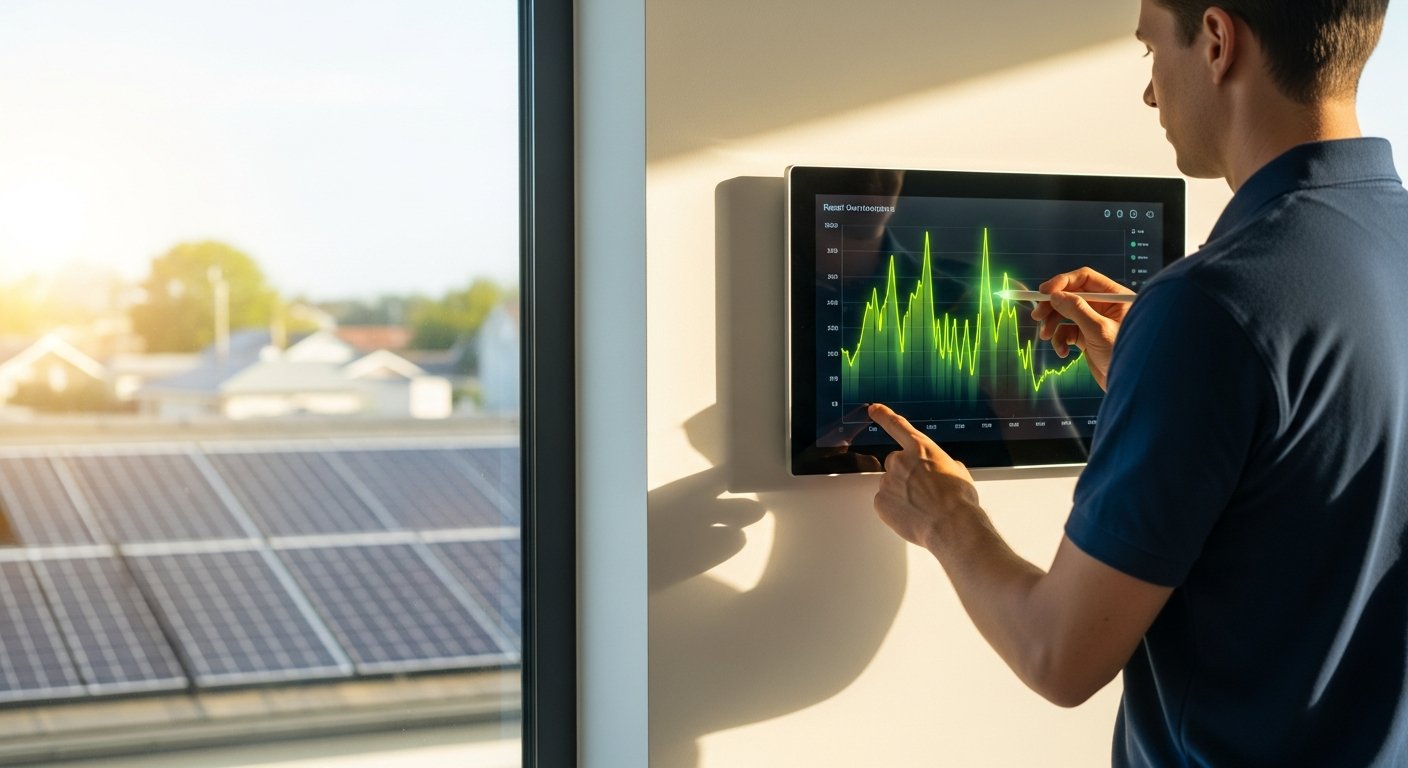
AI Solar Monitoring: Maximize Savings in 2026
AI solar monitoring detects faults early, optimizes energy use, and can cut your electricity bill by 30%. See how it works.

By Owen Phillips
Learn more about Solar Panel Installation and Repair for guides, costs, and what to expect.
Compare Solar Panel Installation and Repair Pros Near You
Enter your ZIP code to compare top-rated local professionals and request free quotes.
Solar panels are a long-term investment, but their performance can quietly degrade without obvious signs. A single shaded panel, a failing inverter, or a layer of dirt can slash your system's output by 20% or more, yet you might not notice until your next electricity bill arrives. This is where AI solar monitoring changes the game. Instead of waiting for a shock bill or a system failure, artificial intelligence watches your solar array in real time, detects anomalies instantly, and tells you exactly what needs attention. For homeowners who want to protect their investment and squeeze every kilowatt-hour from their panels, AI solar monitoring is no longer a luxury, it is a necessity.
In this guide, you will learn what AI solar monitoring actually does, how it differs from traditional monitoring, and why it is the smartest upgrade you can make to your home energy system in 2026. We will also show you how to use AI-driven insights to lower your bills, extend panel life, and get the most from your solar warranty.
What Is AI Solar Monitoring and How Does It Work?
AI solar monitoring is a system that uses machine learning algorithms to analyze data from your solar panels, inverter, and connected sensors. Unlike basic monitoring that simply shows how much energy you produce, AI monitoring looks for patterns, predicts failures, and recommends actions. It learns the normal behavior of your specific system, then flags anything that deviates from that baseline.
The technology works by collecting data every few seconds from each solar panel or string of panels. This data includes voltage, current, temperature, and power output. The AI compares current readings against historical performance and weather forecasts. If a panel produces less than expected on a sunny day, the system knows something is wrong. It can even distinguish between temporary issues like passing clouds and permanent problems like a cracked cell.
Key Components of an AI Monitoring System
A complete AI solar monitoring setup typically includes the following components:
- Smart inverters that transmit real-time performance data to a central hub.
- Panel-level sensors that measure output from each module, enabling precise fault detection.
- Cloud-based software that runs machine learning models on historical and live data.
- User dashboard that presents insights in a simple, actionable format on your phone or computer.
Together, these components create a closed loop: the system detects an issue, alerts you with a specific recommendation, and tracks whether the fix improves performance. Over time, the AI becomes more accurate because it learns from your system's unique conditions, including roof angle, local climate, and seasonal sun patterns.
Why Traditional Solar Monitoring Falls Short
Most solar installations come with basic monitoring that shows total system output. That tells you if your system is producing, but not if it is producing efficiently. A 10% drop in output might go unnoticed for weeks. Traditional monitoring also cannot tell you which panel is underperforming, forcing you to climb onto your roof with a multimeter and test each one manually.
Worse, many homeowners do not check their monitoring dashboards at all. A 2025 survey found that 68% of solar owners never log into their monitoring app after the first month. That means gradual performance losses, which can reach 1% per year from normal degradation, are completely invisible. AI solar monitoring solves this by sending proactive alerts. You do not need to check the dashboard, the dashboard comes to you when something needs attention.
Another limitation of traditional monitoring is that it cannot predict failures. A string inverter might run for years and then fail without warning, leaving you without solar power for days while you wait for a replacement. AI monitoring can detect early warning signs, such as rising temperatures or voltage fluctuations, and alert you weeks before a breakdown occurs. This allows you to schedule maintenance at your convenience, not in an emergency.
How AI Solar Monitoring Boosts Your Savings
The most direct benefit of AI solar monitoring is financial. When your system operates at peak efficiency, every extra kilowatt-hour is money back in your pocket. Consider that a typical residential solar installation in the United States produces around 10,000 kWh per year. A 10% performance loss due to an undetected issue costs you roughly 1,000 kWh annually. At an average electricity rate of $0.17 per kWh, that is $170 lost every year, and this compounds as energy prices rise.
AI monitoring also helps you maximize savings through time-of-use (TOU) optimization. Some AI systems can integrate with smart home batteries to charge when electricity is cheap and discharge when it is expensive. For example, if your utility charges peak rates from 4 PM to 9 PM, the AI can ensure your battery is fully charged by 3:30 PM, then run your home on battery power during peak hours. This strategy alone can cut your electricity bill by 30% or more in areas with high peak rates.
Additionally, AI monitoring can help you take full advantage of net metering policies. By tracking your production and consumption in real time, the system can recommend the best times to run heavy appliances like dishwashers and electric vehicle chargers. This shifts your energy use to periods when your solar output exceeds your consumption, reducing the amount of electricity you buy from the grid.
Detecting Faults Early: The Real Value of AI
Early fault detection is where AI solar monitoring proves its worth. A single underperforming panel can reduce the output of an entire string, especially in older systems without power optimizers. Without AI, you might not notice this for months. With AI, you receive an alert like "Panel 7 is producing 40% below expected output. Possible causes: shading from new tree growth, soiling, or cell damage."
This kind of specific guidance saves you time and money. Instead of hiring a technician to inspect your entire array, you know exactly which panel needs attention. You can then decide whether to trim a tree, schedule a cleaning, or request a warranty replacement. Many solar panel warranties cover 25 years or more, but only if you can prove the panel is defective. AI monitoring gives you the evidence you need to make a claim.
For example, imagine a microinverter fails on one panel. Without AI, your system might still produce enough power that you never notice the loss. When your annual production report shows a dip, you might think it is just a bad year. With AI, you get an immediate alert, and you can contact your installer with the diagnostic data already in hand. This speeds up the repair process and ensures you do not lose months of production while the issue goes undetected.
Choosing the Right AI Solar Monitoring System
Not all AI monitoring systems are created equal. When you evaluate options, look for features that matter for your specific setup. Here are the most important criteria to consider:
- Panel-level monitoring: This is essential for detecting issues with individual panels, not just the whole system.
- Predictive analytics: The system should use machine learning to predict failures before they happen, not just report current problems.
- Integration with storage: If you have a battery, the AI should optimize charging and discharging based on your utility rates.
- User-friendly app: You should be able to understand alerts and take action without needing a technical degree.
- Warranty and support: Choose a system from a reputable provider that offers ongoing software updates and customer support.
If you are installing a new solar system, ask your installer about AI monitoring options. Many manufacturers, including Enphase and SolarEdge, now offer AI-enhanced monitoring as part of their packages. If you already have solar panels, you can often retrofit an AI monitoring solution. Standalone devices like the Sense Energy Monitor can be added to your electrical panel to track solar production and home consumption, then use AI to identify patterns and anomalies.
How to Get Started with AI Solar Monitoring Today
Getting started with AI solar monitoring is easier than you might think. The first step is to assess your current setup. Do you have a monitoring app that shows basic production? If so, check whether it offers any AI features, such as anomaly detection or performance alerts. If not, you have two paths: upgrade your existing monitoring or add a separate AI monitoring device.
For a seamless experience, consider working with a professional solar energy provider that offers AI monitoring as part of a comprehensive service package. SolarEnergy.ai provides free solar energy quotes and can help you design a system with AI monitoring built in. They also offer energy surveys to identify inefficiencies in your current setup, and their technicians can recommend the best monitoring solution for your needs.
Once your AI monitoring is active, take time to configure alerts. Set your notification preferences so that you receive alerts for significant issues, such as a drop below 10% of expected output, but not for minor fluctuations that are normal. You should also connect your monitoring app to your utility's rate schedule if you are on time-of-use pricing. This enables the AI to optimize your battery usage automatically.
Finally, schedule a quarterly review of your monitoring dashboard. Look for trends, such as a gradual decline in output that might indicate soiling or degradation. If you see anything unusual, address it early. The whole point of AI monitoring is to move from reactive to proactive maintenance.
Real-World Impact: A Homeowner's Story
Take the example of a homeowner in Arizona who installed a 6 kW solar system with AI monitoring in 2024. During the first year, the system produced 9,800 kWh, exceeding expectations by 5%. In the second year, the AI detected a 12% drop in output from one string of panels. The alert indicated a likely microinverter failure. The homeowner contacted their installer, and the microinverter was replaced under warranty within two weeks. Without AI, the drop might have gone unnoticed for months, costing the homeowner an estimated $150 in lost production.
More importantly, the AI system also helped the homeowner shift their energy usage to match solar production. By running their pool pump and EV charger during peak solar hours, they reduced grid imports by 40%. Their annual electricity bill dropped from $1,200 to $200, and they achieved a payback period of just 6 years instead of the projected 8. This is the power of AI solar monitoring: it does not just protect your investment, it accelerates your return on it.
Future Trends in AI Solar Monitoring
As we move through 2026, AI solar monitoring is becoming even more intelligent. New systems are using computer vision to analyze satellite images of your roof, detecting shading from trees or new construction that you might not see from the ground. Others are integrating with weather forecasts to predict output for the next 24 hours, allowing you to plan your energy use around sunny periods.
Another emerging trend is the use of AI to automate maintenance scheduling. Instead of just telling you there is a problem, the system can directly book a service appointment with your installer and provide them with the diagnostic data. This reduces downtime and ensures that repairs happen quickly.
For homeowners considering solar, AI monitoring should be a non-negotiable feature. It adds a small upfront cost, but the savings in prevented losses and optimized energy use far outweigh the expense. If you are ready to take control of your solar system's performance, start by exploring your options with a trusted provider. SolarEnergy.ai offers expert guidance, free quotes, and a full range of services to help you maximize your solar investment. To see how AI can enhance your specific setup, check out our detailed breakdown of AI solar monitoring and its benefits for homeowners. For a deeper dive into the financial advantages, read our article on boosting your home savings with AI monitoring. And if you are weighing the pros and cons, our comparison of AI monitoring versus traditional systems will help you decide.
Do not let your solar panels underperform silently. With AI solar monitoring, you can ensure every ray of sunlight is converted into savings, protect your investment for decades, and enjoy true energy independence. The future of solar is intelligent, and it is here now.
Learn more about Solar Panel Installation and Repair for guides, costs, and what to expect.
Compare Solar Panel Installation and Repair Pros Near You
Enter your ZIP code to compare top-rated local professionals and request free quotes.