AI Solar Forecasting: Boost Home Energy Savings
AI solar forecasting helps you use more of your solar energy, cutting bills and boosting savings. See how smart predictions work for your home.

By Mason Carter
Learn more about Solar Panel Installation and Repair for guides, costs, and what to expect.
Compare Solar Panel Installation and Repair Pros Near You

Enter your ZIP code to compare top-rated local professionals and request free quotes.
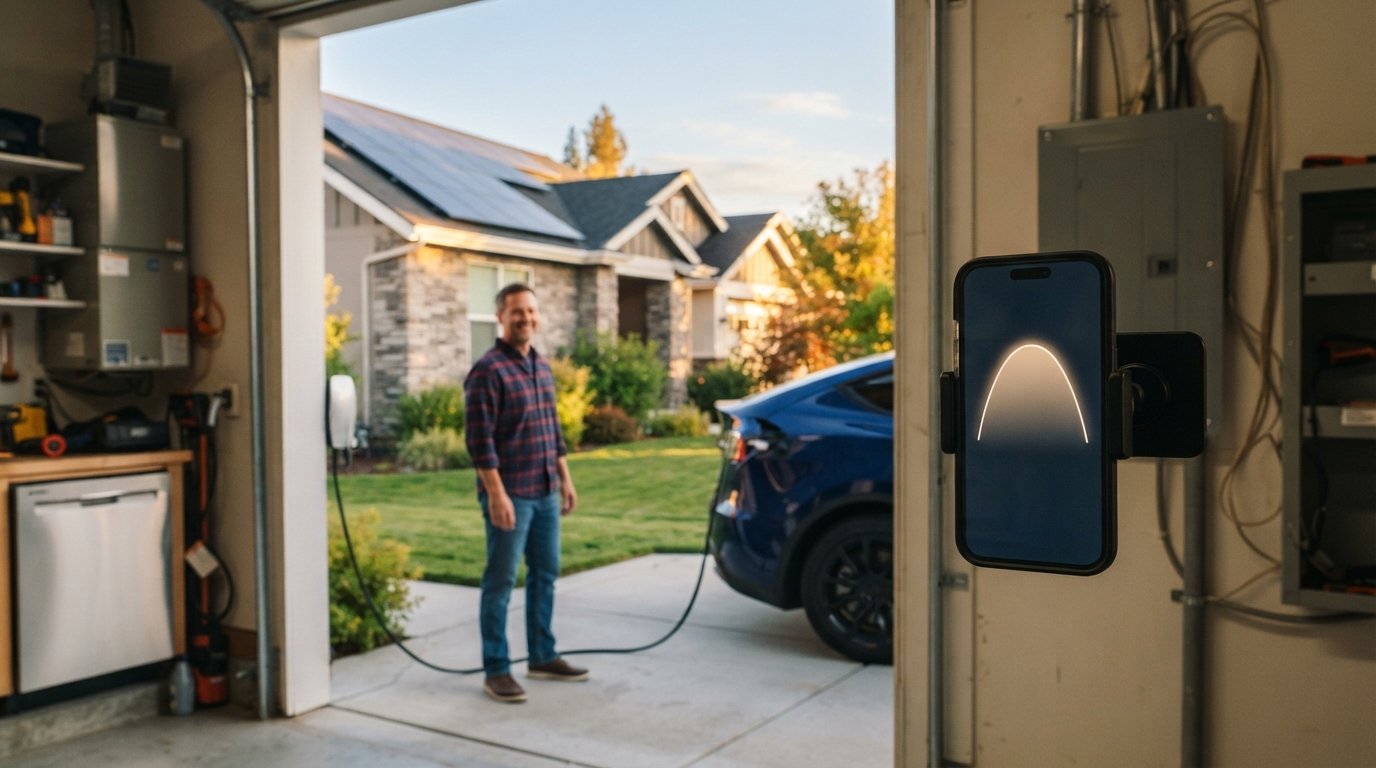
Imagine your solar panels telling you exactly when to run the dishwasher, charge your EV, or pre-cool your home to avoid peak electricity rates. That is no longer a futuristic fantasy. AI solar forecasting has arrived, and it is transforming how homeowners in the United States squeeze every drop of value from their photovoltaic systems. By predicting solar generation with remarkable accuracy, this technology helps you shift your energy use to the sunniest hours, slash your grid consumption, and dramatically increase your savings. This article explains how AI forecasting works, why it is a game-changer for your home, and how you can start using it today to turn your roof into a true smart energy asset.
What Is AI Solar Forecasting and How Does It Work?
AI solar forecasting uses machine learning models to predict how much electricity your solar panels will produce over the next hours, days, or even weeks. Unlike traditional weather-based forecasts that rely on simple satellite images and basic cloud predictions, AI systems ingest a vast array of data points: local weather radar, satellite cloud cover, temperature, humidity, wind speed, and even historical performance data from your specific solar array. The algorithms then learn the unique patterns that affect your panels, such as shading from trees, seasonal sun angles, and the microclimate around your home.
The result is a highly accurate, site-specific forecast that can be updated in real time. For example, when a patch of clouds is moving toward your neighborhood, the AI can predict a dip in production 30 minutes before it happens. This gives you a precise window to reduce your energy consumption or switch to battery power. On a larger scale, AI forecasting is also used by grid operators to manage the flow of renewable energy, but for homeowners, the value lies in personal energy optimization.
To understand the practical impact, consider a typical home with a 6 kW system. Without forecasting, you might set your pool pump to run at noon, but a passing cloud could cut generation, forcing you to pull power from the grid. With AI, you would know to run the pump at 1 PM when the sun is guaranteed to be strong. This is not just about convenience; it is about maximizing your return on investment. In our guide on AI solar forecasting explained, we break down the technical layers in more detail.
Why Homeowners Should Care: The Savings Opportunity
The primary reason to adopt AI solar forecasting is simple: it saves you money. By knowing exactly when your panels will produce the most energy, you can shift your high-consumption activities to those peak hours. This reduces the amount of electricity you pull from the grid, which is especially valuable if your utility uses time-of-use (TOU) rates. During peak rate periods, grid electricity can cost two to three times more than off-peak. AI forecasting helps you avoid those premium prices by timing your laundry, EV charging, and HVAC usage to your solar production curve.
But the savings go beyond just shifting loads. For homes with battery storage, AI forecasting becomes a strategic tool. It can decide when to charge your battery from solar, when to discharge it to power your home during evening peak rates, and even when to sell excess energy back to the grid if your utility offers net metering or a feed-in tariff. This intelligent energy arbitrage can add hundreds of dollars to your annual savings.
Consider these key benefits that AI solar forecasting delivers to your household:
- Reduced grid electricity consumption by aligning usage with solar generation.
- Lower exposure to peak-time rate spikes through smart load shifting.
- Optimized battery charging and discharging cycles for maximum financial return.
- Increased self-consumption of your solar energy, lowering your carbon footprint.
- Proactive maintenance alerts by detecting performance anomalies early.
Each of these benefits contributes to a faster payback period for your solar investment. For instance, if you currently save $1,500 per year on electricity, AI optimization could push that number to $2,000 or more, depending on your utility's rate structure and your ability to schedule energy-intensive tasks. This is not just for tech enthusiasts; it is a practical financial decision for any solar homeowner.
How AI Forecasting Works with Your Smart Home
Integrating AI solar forecasting into your daily life is easier than you might think. Many modern solar systems come with smart inverters and monitoring apps that already include basic forecasting features. However, the real power lies in connecting these forecasts to your smart home devices. Platforms like SolarEnergy.ai can help you find a local installer who can set up this integration, but you can also do it yourself with smart plugs, thermostats, and EV chargers that support automation.
The central hub is your energy management system. This software collects your solar forecast, your real-time energy consumption, and your utility's rate schedule. It then runs optimization algorithms to create an ideal usage plan. For example, it might delay your electric water heater's cycle until a sunny window is predicted, or it might pre-cool your home before the sun sets so the AC does not have to run during peak rates. The system can even send you notifications, like a suggestion to charge your EV at 2 PM instead of 6 PM.
This seamless integration is what makes AI forecasting so powerful. It is not just about predicting the weather; it is about automating your home's response to that prediction. You can wake up to a home that is already optimized for the day's energy outlook, and you can rest easy knowing that your solar system is working at maximum efficiency. For a deeper look into how to boost your savings with smart energy practices, see our article on maximizing home solar savings.
Practical Steps to Start Using AI Forecasting
Getting started with AI solar forecasting does not require a degree in data science. Here is a straightforward process to bring this technology into your home.
- Check your current system: Review your solar inverter's monitoring app. Many modern inverters already have a forecasting feature. If you see a daily or hourly solar production prediction, you are already partway there.
- Connect your smart devices: Identify the smart appliances in your home that can be scheduled, such as your thermostat, water heater, pool pump, or EV charger. Ensure they are connected to your Wi-Fi and controllable via an app or API.
- Choose an energy management platform: Look for a service that can aggregate your solar forecast and device controls. Some solar companies offer this as part of their monitoring service, while third-party apps like Home Assistant or EnergyHub can also work. If you need help, a professional installer can recommend a solution that fits your system.
- Set your preferences: Define your goals, such as maximizing savings, minimizing carbon footprint, or prioritizing battery backup. The AI will then adjust its recommendations accordingly.
- Monitor and tweak: After a few weeks, review your energy reports. See where the AI's predictions were less accurate and adjust your settings or add new data sources, like a local weather station, to improve performance.
This step-by-step approach allows you to start small and scale up as you become more comfortable. The key is to begin with a single smart device, like a smart thermostat, and then expand to other loads. Over time, you will see a clear pattern of reduced grid consumption and lower bills.
Overcoming Challenges and Common Misconceptions
Despite the clear benefits, some homeowners are hesitant to adopt AI forecasting. The most common concern is the accuracy of the predictions. While no forecast is perfect, AI models have proven to be significantly more accurate than traditional methods, especially for short-term predictions (0 to 4 hours ahead). For solar energy, this short-term accuracy is what matters most for load shifting. A 90% accuracy rate for a 3-hour-ahead prediction is common, which is more than sufficient for planning your energy usage.
Another misconception is that AI forecasting is only for off-grid homes or those with batteries. In reality, even grid-tied systems without storage can benefit by shifting loads to sunny periods. The financial logic is simple: your solar energy is free, so using more of it directly reduces your utility bill. AI just makes it easier to do so without constant manual adjustments.
There is also the worry about the cost of implementing these systems. However, many solar monitoring apps now include basic forecasting at no extra charge. Advanced third-party energy management systems may have a monthly fee, but they often pay for themselves through increased savings within a few months. Additionally, as part of a comprehensive energy strategy, you can leverage professional services like an energy survey to unlock bigger savings, which can identify other inefficiencies in your home that compound the benefits of AI forecasting.
The Future of Home Energy Management
AI solar forecasting is not a passing trend; it is the foundation of the modern smart home. As utilities continue to adopt time-of-use rates and renewable energy penetration grows, the ability to predict and adapt to solar generation will become even more valuable. We are already seeing the rise of virtual power plants, where thousands of homes with solar and batteries are aggregated to provide grid services. AI forecasting is the key to making these systems work, allowing each home to know exactly when it can contribute power.
For the average homeowner, this means that solar panels are no longer just a source of electricity; they are a dynamic asset that can be managed like a financial portfolio. The technology is evolving rapidly, with new algorithms that can learn from your specific habits, improving their recommendations over time. In the near future, we can expect to see even deeper integration with electric vehicles, where your car's battery becomes an extension of your home's energy storage, all coordinated by AI.
The bottom line is that AI solar forecasting is an essential tool for anyone who wants to maximize the return on their solar investment. It takes the guesswork out of energy management and puts you in control of your savings. Whether you are a new solar adopter or have had panels for years, integrating AI into your system is a smart, forward-thinking move.
If you are ready to take the next step, consider connecting with a vetted solar professional through SolarEnergy.ai. They can help you evaluate your current system, recommend the right forecasting tools, and ensure your home is set up for maximum efficiency. The future of energy is intelligent, and it is available to you today.
Learn more about Solar Panel Installation and Repair for guides, costs, and what to expect.
Compare Solar Panel Installation and Repair Pros Near You
Enter your ZIP code to compare top-rated local professionals and request free quotes.