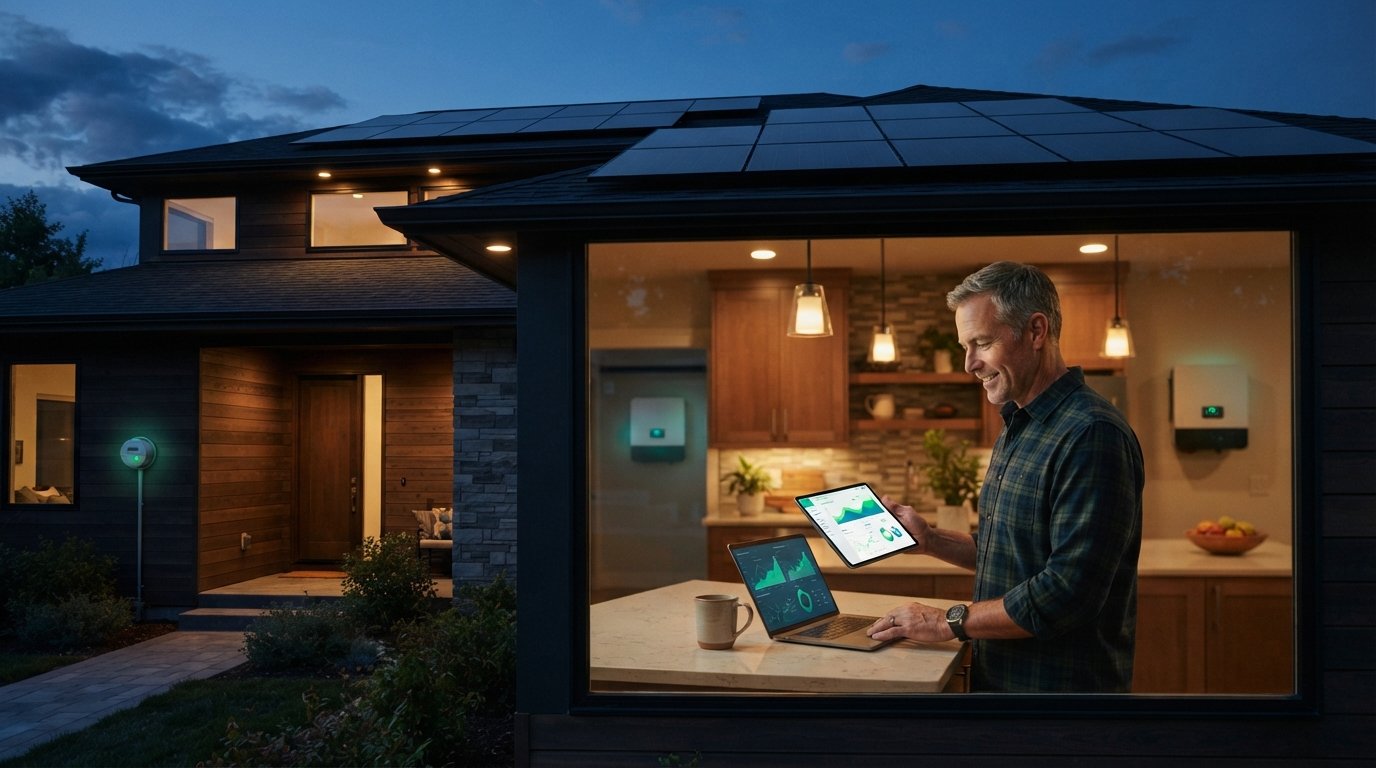
AI Powered Solar Monitoring System: Maximize Your Savings
An AI powered solar monitoring system detects faults, optimizes battery use, and cuts your electric bills by up to 20%. See how it works.

By Ryan Brooks
Learn more about Solar Panel Installation and Repair for guides, costs, and what to expect.
Compare Solar Panel Installation and Repair Pros Near You

Enter your ZIP code to compare top-rated local professionals and request free quotes.
Your solar panels are working, but are they working as hard as they should? A dirty panel, a shaded string, or a failing inverter can quietly drain your system's output and stretch your payback period by years. The traditional approach of checking your monthly utility bill is not enough anymore. That is where an AI powered solar monitoring system changes everything. It does not just show you how much energy you produce; it learns your home's patterns, detects anomalies in real time, and tells you exactly when to act. For homeowners who want true energy independence and maximum return on investment, this technology is no longer optional.
Think of it as a smart home energy manager that works around the clock. Instead of waiting for a surprise bill or a sudden system failure, you get a constant, intelligent pulse on your entire solar setup. In this guide, we will break down how AI powered solar monitoring systems work, the real benefits they deliver, and how you can use one to protect your investment and slash your electric bills.
What Is an AI Powered Solar Monitoring System?
At its core, a solar monitoring system tracks the performance of your photovoltaic panels, inverters, and battery storage. Traditional monitoring tools show you basic data like daily kilowatt-hours produced. An AI powered solar monitoring system takes this a step further. It uses machine learning algorithms to analyze that data, compare it with weather forecasts, your historical usage, and even the performance of similar systems in your area. The result is a dashboard that tells you not just what is happening, but why it is happening and what you should do about it.
For example, if one of your panels produces 15% less energy than usual on a sunny Tuesday, the system will flag it. It might detect that a tree branch has grown over part of the array, or that a microinverter is failing. Without AI, you might not notice this degradation for months. With AI, you get an instant alert on your phone, complete with a suggested action. This proactive approach is the difference between a system that merely functions and one that is truly optimized.
The technology also excels at forecasting. By analyzing weather patterns and your past energy consumption, the system can predict tomorrow's production and your likely usage. It then uses this insight to manage your battery charging and discharging cycles intelligently. This means you are not just generating clean energy; you are using it at the most strategic times, further reducing your reliance on the grid.
Key Benefits of AI Solar Monitoring for Homeowners
Adopting an AI powered solar monitoring system is not about having a cooler app. It is about tangible, financial and practical outcomes that directly impact your household. Here are the most significant advantages you will experience:
- Early Fault Detection: AI identifies underperforming panels, inverter issues, and wiring problems before they become costly failures.
- Reduced Energy Bills: By optimizing when you use and store energy, the system lowers your grid consumption, especially during peak rate hours.
- Longer Equipment Lifespan: Catching small issues early prevents them from stressing other components, extending the life of your entire system.
- Data-Driven Decisions: You get clear evidence of your system's performance, which is useful for warranty claims or discussions with your installer.
These benefits translate directly into peace of mind. You are no longer guessing about your system's health. Instead, you are armed with precise, actionable information. For example, when a storm rolls through, the system can tell you if any panels sustained damage, saving you from climbing onto your roof for a manual inspection. This level of insight is invaluable for protecting a significant home investment.
Furthermore, this data becomes your ally if you ever need to file a warranty claim or negotiate with an installer. Instead of relying on your memory or a paper log, you have a detailed, timestamped record of your system's performance. This can pressure a manufacturer to replace a faulty component quickly, minimizing your downtime and lost savings.
How AI Monitoring Optimizes Your Energy Consumption
An AI powered solar monitoring system does more than watch your panels; it actively manages your home's energy flow. It connects to your smart meter, battery storage, and even major appliances to create a dynamic energy ecosystem. This is where the real magic happens. The system learns your daily routines, such as when you run the dishwasher or charge your electric vehicle, and aligns your solar production with those high-demand periods.
Consider a typical weekday. Your panels produce the most energy between 10 a.m. and 3 p.m., but you are not home. Without AI, that excess energy is often sent back to the grid for a small credit. With AI, the system can pre-cool your home, charge your EV, or heat your water during those peak production hours. This is called load shifting, and it maximizes the electricity you consume directly from your panels, rather than selling it low and buying it back high later.
When paired with a battery, the intelligence becomes even more powerful. The system analyzes your utility's time-of-use rates and your consumption patterns to decide the optimal time to store energy and when to discharge it. On a hot summer evening, when rates are at their highest, the system will draw from your battery instead of the grid, dramatically cutting your bill. This level of optimization is simply not possible with a standard monitoring setup.
To get a deeper understanding of how these intelligent systems work alongside your panels, review our detailed guide on solar monitoring platform tracking performance. It explains the underlying data flow and how you can interpret the metrics to your advantage.
Choosing the Right AI Monitoring System for Your Home
When you decide to upgrade to an AI powered solar monitoring system, you will find several options on the market. The key is to choose one that integrates seamlessly with your existing hardware and meets your specific needs. You should consider the following factors before making a purchase:
- Compatibility: Ensure the monitoring system works with your inverter brand (e.g., SolarEdge, Enphase) and battery storage. Some systems are proprietary, while others are open-source.
- Data Granularity: Look for systems that offer panel-level monitoring, not just string-level. This allows you to see exactly which panel is underperforming.
- AI Features: Check if the system offers predictive alerts, load shifting, and battery optimization. Basic monitoring does not include these advanced functions.
- Integration: The system should work with your home Wi-Fi, smart home assistants, and ideally, provide a mobile app with push notifications.
- Cloud vs. Local: Decide if you want your data stored in the cloud (easier access) or locally (more privacy). Many systems offer a hybrid approach.
Once you select a system, the installation is usually straightforward. Most modern inverters have built-in monitoring capabilities, but adding an AI layer often requires a separate gateway device that connects to your router. After setup, you will calibrate the system by linking your utility account and letting it learn your usage patterns for a few days. The real value emerges after this learning period, when predictions and alerts become highly accurate.
If you are still researching solar panels and want to understand how AI enhances the entire generation process, our article on AI powered solar panels boosting savings provides a great overview. It connects the dots between panel efficiency and intelligent software, showing you how to get the most from every photon.
Real-World Impact: From Data to Dollars
The ultimate test of any technology is whether it puts money back in your pocket. An AI powered solar monitoring system passes this test with flying colors, but the savings are not always immediate. The first few months are about gathering data and establishing a baseline. After that, the system starts to identify inefficiencies and automatically correct them. For example, it might detect that your battery is discharging too early in the evening, and adjust the schedule to preserve that power for peak hours between 7 p.m. and 9 p.m.
These small adjustments compound over time. Homeowners who use AI monitoring typically report a 10% to 20% increase in self-consumption of their solar energy. That means you are buying less electricity from your utility, which directly translates to a lower monthly bill. In states with high electricity rates, like California or Massachusetts, this can amount to hundreds of dollars in annual savings.
Moreover, the system helps you avoid costly surprises. A failing inverter can reduce your production by 50% for weeks before you notice it. The AI system will alert you within hours of the anomaly, allowing you to schedule a repair quickly. This proactive maintenance can save you from losing hundreds of dollars in potential savings and prevent a small issue from becoming a major repair. In fact, you can slash your electric bills significantly by combining AI monitoring with a well-sized system, as discussed in our piece on slashing electric bills with AI solar.
Integrating AI Monitoring with Your Smart Home
The true potential of an AI powered solar monitoring system is unlocked when it integrates with your broader smart home ecosystem. Imagine your EV charger, thermostat, and water heater all communicating with your solar system. This is not science fiction; it is happening in homes across the U.S. today. The monitoring system acts as the central brain, coordinating all these devices to run when your solar production is highest and your battery is full.
For instance, on a sunny day, the system might delay running your pool pump until 11 a.m., when your panels are producing maximum output. It might also signal your EV charger to start charging your car at noon instead of midnight, using clean solar power instead of grid electricity. This coordination reduces your carbon footprint and your energy bill simultaneously. It also provides a level of convenience, as you no longer need to manually set timers or monitor your usage.
Furthermore, AI monitoring can enhance your home's resilience. When a grid outage occurs, the system automatically switches your home to battery power, prioritizing essential circuits like your refrigerator, internet, and lights. It can even manage a generator if you have one, ensuring a seamless transition. This is a significant advantage for homeowners in areas prone to extreme weather, as it provides both financial and physical security.
As you embrace this technology, you will find that your role shifts from a passive observer to an active energy manager. You are not just installing solar panels; you are installing a comprehensive energy system that thinks for itself. This shift is what separates the early adopters from the mainstream, and it is the key to maximizing your return on investment.
The Future of Solar Monitoring: What to Expect
The field of AI solar monitoring is evolving rapidly. In the next few years, we can expect even deeper integration with grid services. Utilities are beginning to offer programs where they can remotely adjust your thermostat or battery during peak demand events, and AI will be essential for managing these interactions without compromising your comfort. We will also see more sophisticated anomaly detection, where the system can identify specific types of panel degradation (like micro-cracks) long before they become visible.
Another trend is the use of AI to optimize for multiple objectives simultaneously. For example, the system could balance your desire for maximum savings with your preference for using more renewable energy, even if it means slightly higher costs. It could also factor in the carbon intensity of grid power, shifting your consumption to times when the grid is greener. This level of personalization will make solar energy even more attractive to environmentally conscious homeowners.
Finally, we will see improved user interfaces that make complex data more accessible. Instead of confusing charts, you will see simple health scores and plain-language recommendations. The system might tell you, "Your system is performing 10% below normal because of dust buildup. Consider a cleaning scheduled for next week." This removes the barrier to entry for less tech-savvy homeowners, ensuring that everyone can benefit from AI optimization.
To stay ahead of the curve, it is wise to start with a system that offers firmware updates. This ensures your monitoring system will gain new features and capabilities as the technology matures, protecting your investment for years to come. The future is bright, and AI is leading the way.
Taking Action: Your Path to Smarter Solar
Upgrading to an AI powered solar monitoring system is a decision that pays for itself many times over. It is not just about monitoring; it is about optimization, protection, and peace of mind. The first step is to assess your current setup. Do you have a compatible inverter? Is your system connected to the internet? If you are unsure, many professional installers offer energy surveys that can identify the best monitoring solutions for your specific hardware.
Once you have the system installed, give it time to learn. The initial data may not be surprising, but after a few weeks, you will start receiving insights that save you money. You will also gain confidence in your system's performance, knowing that any issue is just a notification away. Instead of worrying about your panels, you can focus on enjoying the benefits of clean, affordable energy.
If you are planning a new solar installation, make AI monitoring a requirement from the start. Ask your installer about the monitoring options available and choose one that offers robust AI features. This will ensure you are getting the maximum value from your investment from day one. The combination of high-efficiency panels and intelligent software is the best way to achieve true energy independence and financial savings.
The journey to a smarter, more efficient home starts with a single step. By embracing an AI powered solar monitoring system, you are not just keeping up with technology; you are staying ahead of it. You are taking control of your energy future, one data point at a time.